

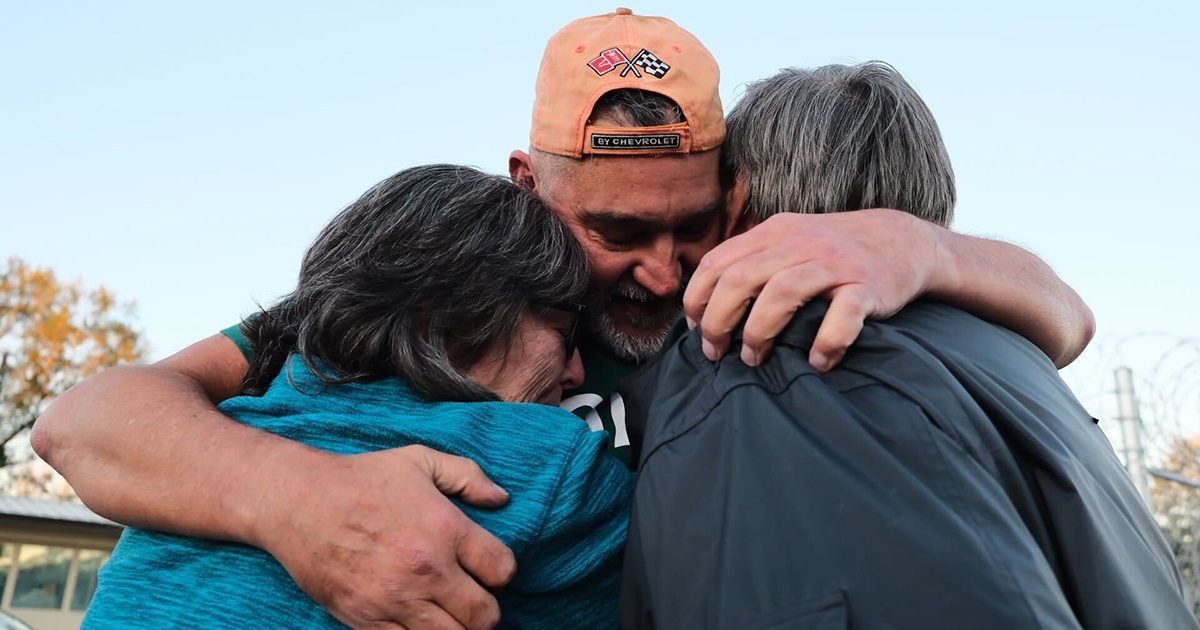
Jimmie “Chris” Duncan walked out of the Ouachita Parish Correctional Center and into the arms of his parents last week after spending the last 27 years on death row.
Seven months ago, a Louisiana district court judge vacated his murder conviction for killing his former girlfriend’s toddler, citing doubts about the evidence used to convict him. The judge granted bail after multiple legal delays, including an unsuccessful request by prosecutors to the Louisiana Supreme Court to stop his release. Now free, Duncan spent Thanksgiving with his family — then celebrated his 57th birthday the next day.
But Duncan’s journey to freedom is far from over. Prosecutors have asked the state Supreme Court to reinstate his death sentence. Duncan’s attorneys declined to make him immediately available for an interview.
In 1998 Marcellus Williams was convicted of murder. During the appeals processes it was found that he was not a match for any of the copious forensic evidence at the crime scene. He was convicted entirely on the testimony of two people with long records of lying to authorities and who stood to gain leniency in prosecutions for unrelated matters in exchange for their testimony. The prosecutor and the victims family spoke out against the push to execute him, in light of the exculpatory evidence.
It was ultimately determined that being innocent wasn’t a good enough reason not to execute, and he was killed in September of last year. 22 years in prison and then executed despite no evidence he committed the crime and strong evidence that he didn’t.
If being provably innocent isn’t enough to stop an execution, then what possibly could be?