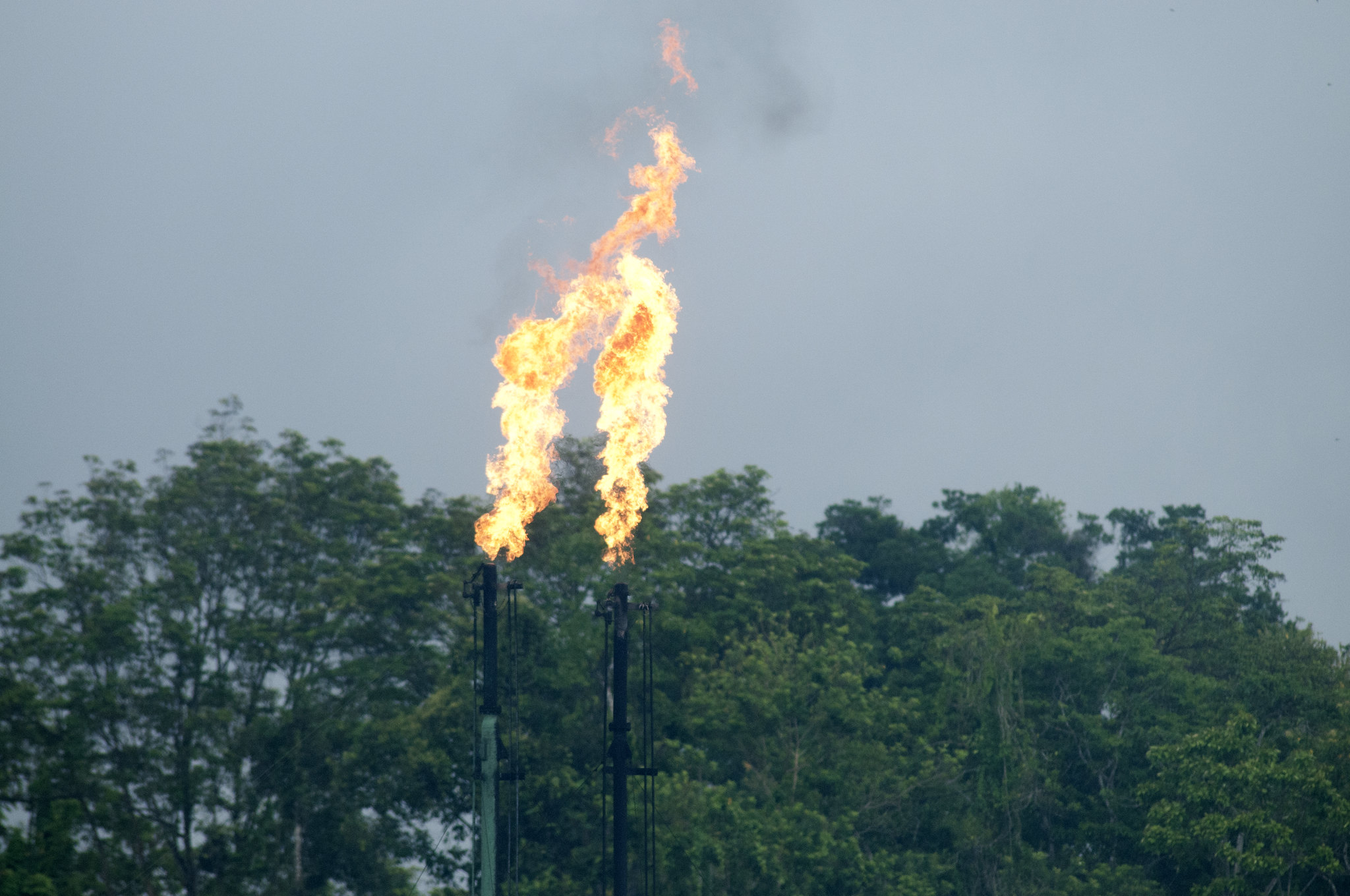
stop funding fossil fuels abroad
It looks like Germany banned domestic hydrofracking in 2017, so I don’t know how much natural gas Germany can realistically extract domestically.
EDIT:
https://en.wikipedia.org/wiki/Energy_in_Germany
Energy in Germany is obtained primarily from fossil fuels, accounting for 77.6% of the country’s total energy consumption in 2023, followed by renewables at 19.6%, and nuclear power at 0.7%, the latter of which being no longer used since 15 April 2023, when the last three remaining German nuclear reactors were taken offline.[2][3][4]
In 2021, Germany was the world’s largest importer of natural gas, which covered more than a quarter of primary energy consumption in Germany.[17] Around 95% of Germany’s natural gas was imported, of which around half is re-exported.
It doesn’t sound as if domestic production is anywhere near handling German requirements.
Last year Germany produced 5% of fossil gas consumption, 2% of oil consumption and no hard coal domestically. Lignite and renewable are fully domestic however. Even with hydrofracking it would not be close to enough. The only realistic way is to end oil, gas and hard coal consumption in Germany.
Source in German: https://ag-energiebilanzen.de/wp-content/uploads/AGEB_Infografik_04_2026_Importabhaengigkeit_2025.pdf
However this is different. A German company sold a gas rig to Brazil and basically the German government gave the manufacturer a guarantee, that if the Brazilians can not pay, the German government would cover it. This is an indirect subsidy for fossil fuels, which should not happen.
Energy in Germany is obtained primarily from fossil fuels, accounting for 77.6% of the country’s total energy consumption in 2023, followed by renewables at 19.6%, and nuclear power at 0.7%, the latter of which being no longer used since 15 April 2023, when the last three remaining German nuclear reactors were taken offline.[2][3][4]
The claim that “energy in Germany is obtained primarily from fossil fuels, accounting for 77.6% of the country’s total energy consumption in 2023” is backed by several sub-links provided as footnotes 2, 3, and 4.
If you click on footnote 2, you run into a 404. The page doesn’t exist.
If you go directly to the BDEW website, the BDEW thankfully offers data about Germany’s energy production and consumption. Amongst others, the data says (opens pdf):
- The share of renewables in German electricity production rose from 52% in 2023 to 58% in 2025.
- The share of renewables in German electricity consumption rose from 53% in 2023 to 55% in 2025.
Footnote 3 takes you to a well-sourced article published by Clean Energy Wire. The article is citing federal sources and, therefore, mirroring the data provided by the federal agency BDEW.
It sounds that both German domestic energy production and consumption is on the right track. It remains unclear where the 77.6% figure cited in Wikipedia comes from, especially as it is in direct contradiction to the referenced sources.
As a side note, we must say that among larger economies, particularly China is far behind these numbers. For example, while China’s total energy production and consumption gained from coal has been below 50% of the country’s energy mix, the total energy gained from coal in China has been increasing over the years. And Beijing says it intends to increase its coal energy generation in the coming years further. It is planning to reach its peak of energy production gained from coal in 2030, while the government hasn’t yet a clear coal exit strategy.
Contrary to China, as seen in the data I have linked to in this comment, Germany’s energy production from coal (hard coal and brown coal combined) decreased from more than 300 kWh in 1991 to 105 kWh in 2025. That’s 21% of total production.
[Edit typo.]
It remains unclear where the 77.6% figure cited in Wikipedia comes from, especially as it is in direct contradiction to the referenced sources.
Oh, that’s easy. Because it’s one of the oldest propaganda narratives spread.
You see… everytime we talk about renewables or those evil Germans trying to burn the world by getting people subscribed to the renewable scam, we reference total energy consumption (see: primary energy intake), which is not only electricity production but also heating (often partly by burning fossil fuels), transport (oil, oil, oil…) and even gas and oil used as raw material in chemical production because it could theoretically be burned. This way you can argue how useless renewales obviously are as there’s still fossil fuel consumption.
On the other hand if you want to promote the totally not economical insanity of building more nuclear power or any other really “smart plan” to avoid those renewable trash, you ignore everything but electricity. So you can praise countries for their oh so low CO₂ output that actually burn massive amounts of fossil fuels like everyone else (see Europe’s low carbon poster child France for example burning 1.6 times the TWh in fossil fuels than what they produce in nuclear-powered electricity).
So and where does the number come from then? Would also be great if we could see global statistics by country by comparable data.
You click the provided link and scroll down past the electricity only stats…
https://ag-energiebilanzen.de/daten-und-fakten/primaerenergieverbrauch/
https://ag-energiebilanzen.de/daten-und-fakten/auswertungstabellen/


And how does this compare to other world regions /countries? Is there any source with comparable data?
For a basic overview you could browse through ourworldindata for example.
I randomly selected a few European countries for per capita primary consumption here
Electricity production is only a part of the total energy consumption. Gas heating or combustion engine cars do not use electricity for example, but are clearly energy consumption. Hence both numbers can be true at the same time, since electricity in Germany is much cleaner then other forms of energy.