Not really. We don’t have materials that absorb or reflect infrared light. It’s one of the reasons it’s hard to beat inferred-guided (heat seeking) missiles, the only real solution is to drop something hotter than your plane, aka a flare.
So… get ready for a new era of commercial automotive flares I guess?
You are mixing different types of IR and on top are wrong for both cases too. We have materials for both NIR and thermal IR that absorb or reflect them.
So if we focus on thermal IR: shiny metal surfaces hardly emit or absorb it. A black surface emits and absorbs as much as possible. We quantify this via the emissivity (and also reflectivity, shiny metal is a mirror). Emissivity of 1 = theoretical maximum of a prefect absorber/emitter (both are directly linked), everyday stuff like skin or wood is about 0.95, shiny metal surfaces roughly 0.1, a rusty or painted surface again about 0.95.
You only emit and absorb the same in thermal equilibrium. If the surface is hotter, it emits more. If it is colder, it absorbs more.
So with that last part, I get that in theory, but practically, you can only really absorb IR temporarily, right? Because it all gets released again as heat eventually. Like, say you have a mostly inert object, that isn’t creating any meaningful amount of heat. If you hit that object with 10 joules of thermal IR, over time, wouldn’t nearly all of that energy be either reflected or emitted off it as IR radiation?


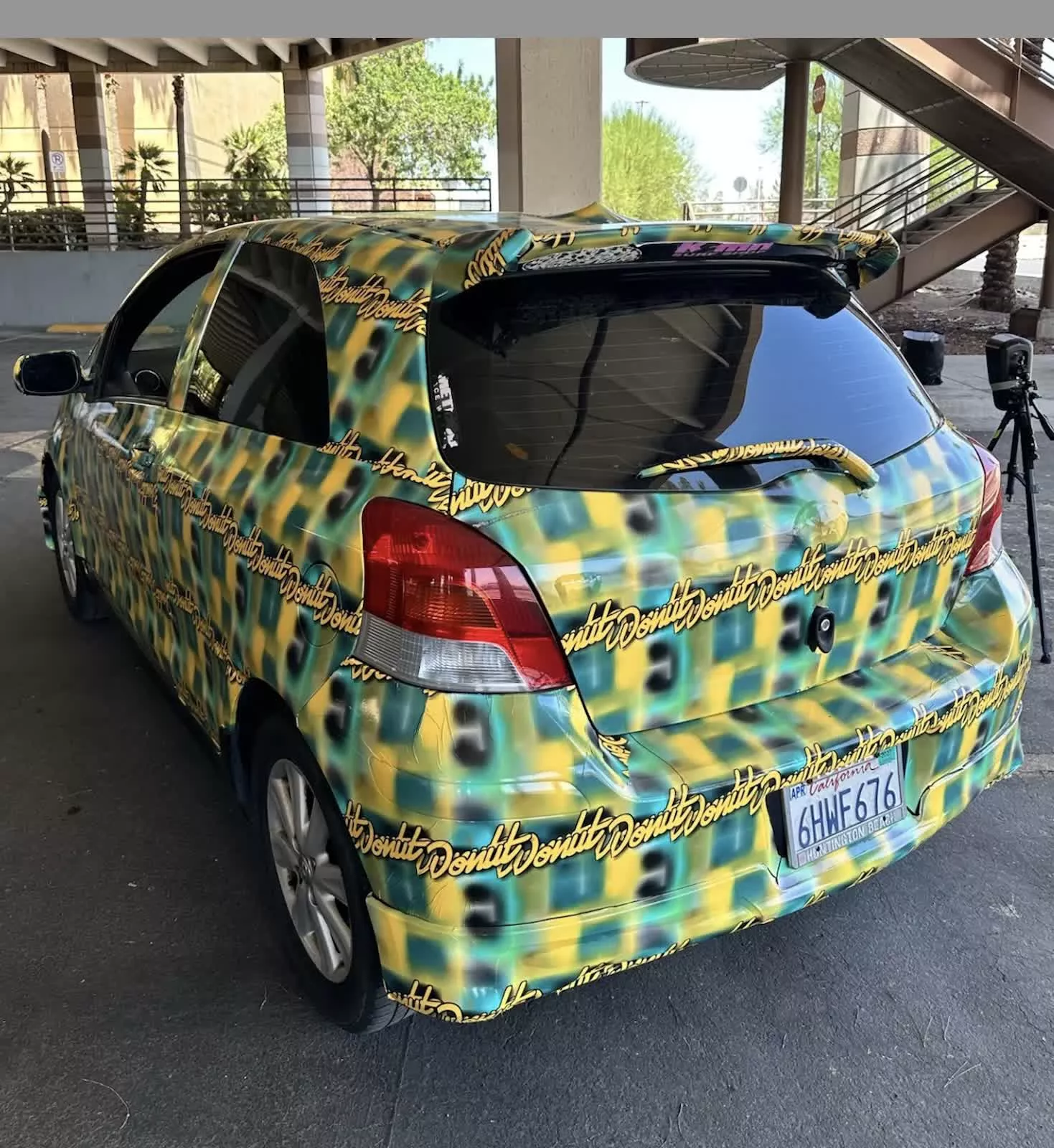
Can’t you make patterns in infrared reflective paint?
Here comes the sun, do do do do
No need, you can just use an IR spotlight to blind the camera. Unlike the military you’re not trying to hide the vehicle.
But either way you’re actively trying to avoid being picked up by speed cameras so you get a fine.
This isn’t about speed cameras, it’s about “safety” surveillance cameras. No laws have to be broken. Evading Flock isn’t illegal
*yet
Not really. We don’t have materials that absorb or reflect infrared light. It’s one of the reasons it’s hard to beat inferred-guided (heat seeking) missiles, the only real solution is to drop something hotter than your plane, aka a flare.
So… get ready for a new era of commercial automotive flares I guess?
You are mixing different types of IR and on top are wrong for both cases too. We have materials for both NIR and thermal IR that absorb or reflect them.
I’ve been wrong before, this wouldn’t be the first time. But what part of it was wrong? Genuinely, can you clear it up?
As far as absorbing IR light, I’m not even sure how that would work, wouldn’t it just be emitted again as heat?
So if we focus on thermal IR: shiny metal surfaces hardly emit or absorb it. A black surface emits and absorbs as much as possible. We quantify this via the emissivity (and also reflectivity, shiny metal is a mirror). Emissivity of 1 = theoretical maximum of a prefect absorber/emitter (both are directly linked), everyday stuff like skin or wood is about 0.95, shiny metal surfaces roughly 0.1, a rusty or painted surface again about 0.95.
You only emit and absorb the same in thermal equilibrium. If the surface is hotter, it emits more. If it is colder, it absorbs more.
So with that last part, I get that in theory, but practically, you can only really absorb IR temporarily, right? Because it all gets released again as heat eventually. Like, say you have a mostly inert object, that isn’t creating any meaningful amount of heat. If you hit that object with 10 joules of thermal IR, over time, wouldn’t nearly all of that energy be either reflected or emitted off it as IR radiation?
What if I just hold a sparkler out my window?