

- cross-posted to:
- [email protected]

- cross-posted to:
- [email protected]
Personal opinion: Nathan seems to be really side-stepping a lot of concerns brought of up in the comments there. And referring to people coming together collectively in an open-letter when virtually all other channels are closed as ‘brigading’ is… Not cool. Edit: he retracted the use of brigading.
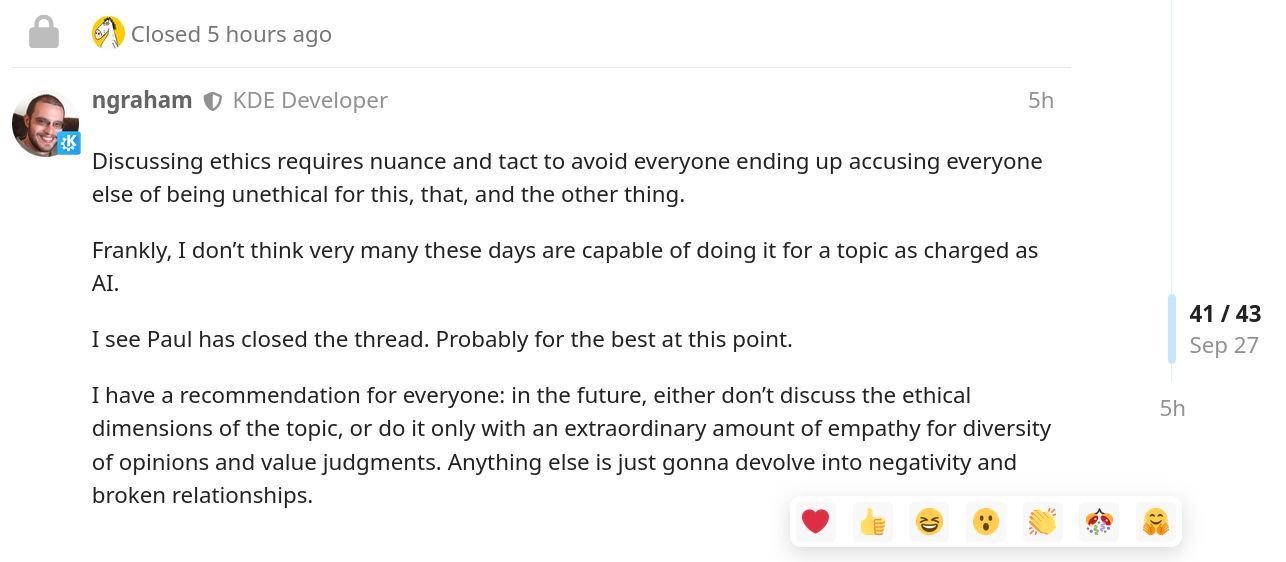
EDIT 2: Nate has since closed the comments on his blog, and the one discussion thread on KDE Discuss about the AI Policy was closed suddenly without explanation after a KDE developer began to discuss the ethics of AI use. Nate then responded after the thread was closed with this:
literally the next sentence after the reasons, he calls LLMs “bad stuff”. That does not sound like “equal weight on the scale” to me.
I agree that the license issue should be enough to not touch anything generated by AI, to not taint the codebase
Did you stop reading there? Here is your quote + the next paragraph
I don’t think that conclusion is even accurate and it’s certainly the subject of much debate. He then crunches all of both negative and positive into a 5 bullet list that makes it look much more balanced:
You’re apparently reading it differently but it looks to me like half the article is trying to funnel into justifying making this a difficult decision after making the case for it really not to be up front. Why do that?
I see, yes you are probably right