

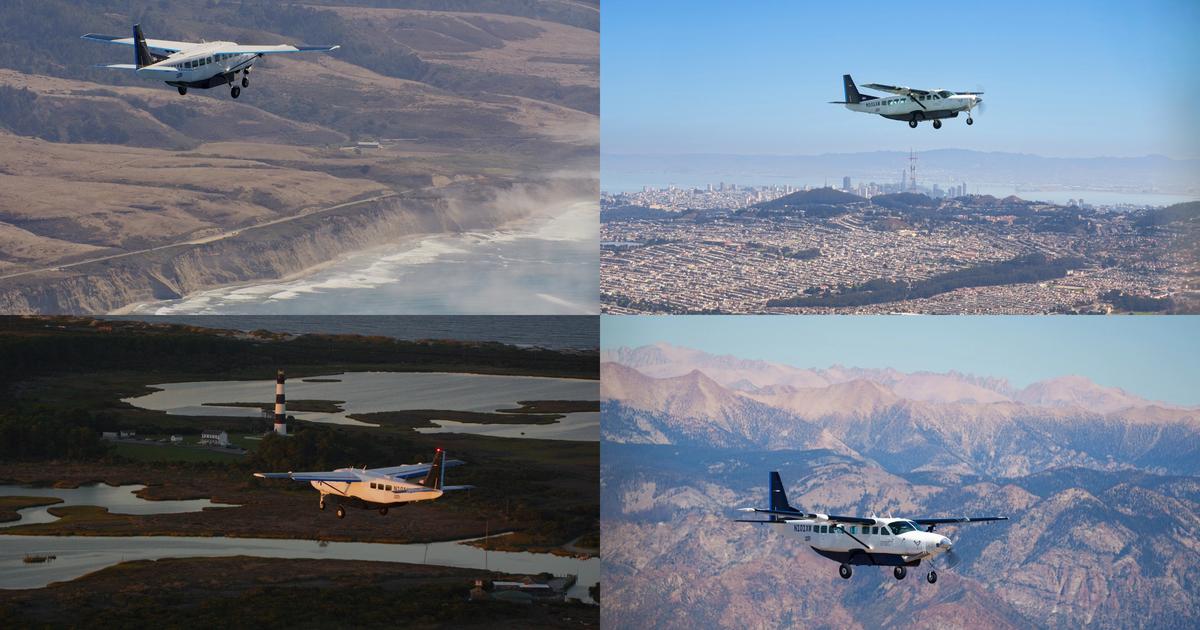
“The aircraft, a converted Cessna Caravan, performed autonomous taxiing, takeoffs, route navigation, and landings under remote supervision from Joby’s Autonomy Headquarters in California and Shaw Air Force Base in South Carolina, up to 2,323 miles away. The journey demonstrated the operational capabilities of Joby’s autonomy technology across a range of environments, supporting applications in commercial freight, medical transport, disaster response, and defense logistics.”
We can see 2 ways future air travel may get much cheaper now that electric powered flight is becoming a reality for smaller/mid-sized planes. Cheap fuel (electricity) & much lower staffing costs thanks to self-flying tech.
Will there one day be an airline that is 100% electric and only self-flying? Probably. This strikes me as a great option for people who live in more sparsely populated areas. They are not economical for the big airlines, but they may be for an all-electric self-flying airline.
Joby Completes First-Ever Fully Autonomous Flight Across the United States
Not every plane carries people of course. And neural networks aren’t all like LLMs. They can be entirely deterministic and can be trained in tons of simulated environments. There’s no reason it’s inherently worse than any other algorithm.
pretty sure you don’t want a cargo airliner crashing into your home.
and I don’t give a single fuck about the particulars of whatever the shit “ai” this company is using. Hard fucking no. Full stop.
My point is that neural networks are already in use in modern planes, exactly what you called tried and tested before. Those applications can be a far cry from what you know as “AI”. This stuff has existed for decades now.
I haven’t flown since ADS-B was implemented so I could very well be ignorant here.
What’s an example of a neural network based system on, say, a modern passenger airliner?
Turns out I need to eat my words a little bit here. Airbus does have a plane that uses computer vision to take off and land, and taxi on the ground. And there’s systems to visually detect other planes in the sky to help with collision avoidance. But they’re not in passenger airliners yet because when the regulations were written decades ago, neural networks weren’t big yet so it apparently says that every line of code needs to be directly traced back to a requirement, which is hard to do with weights. This is being revamped as far as I can tell, but not just yet.