

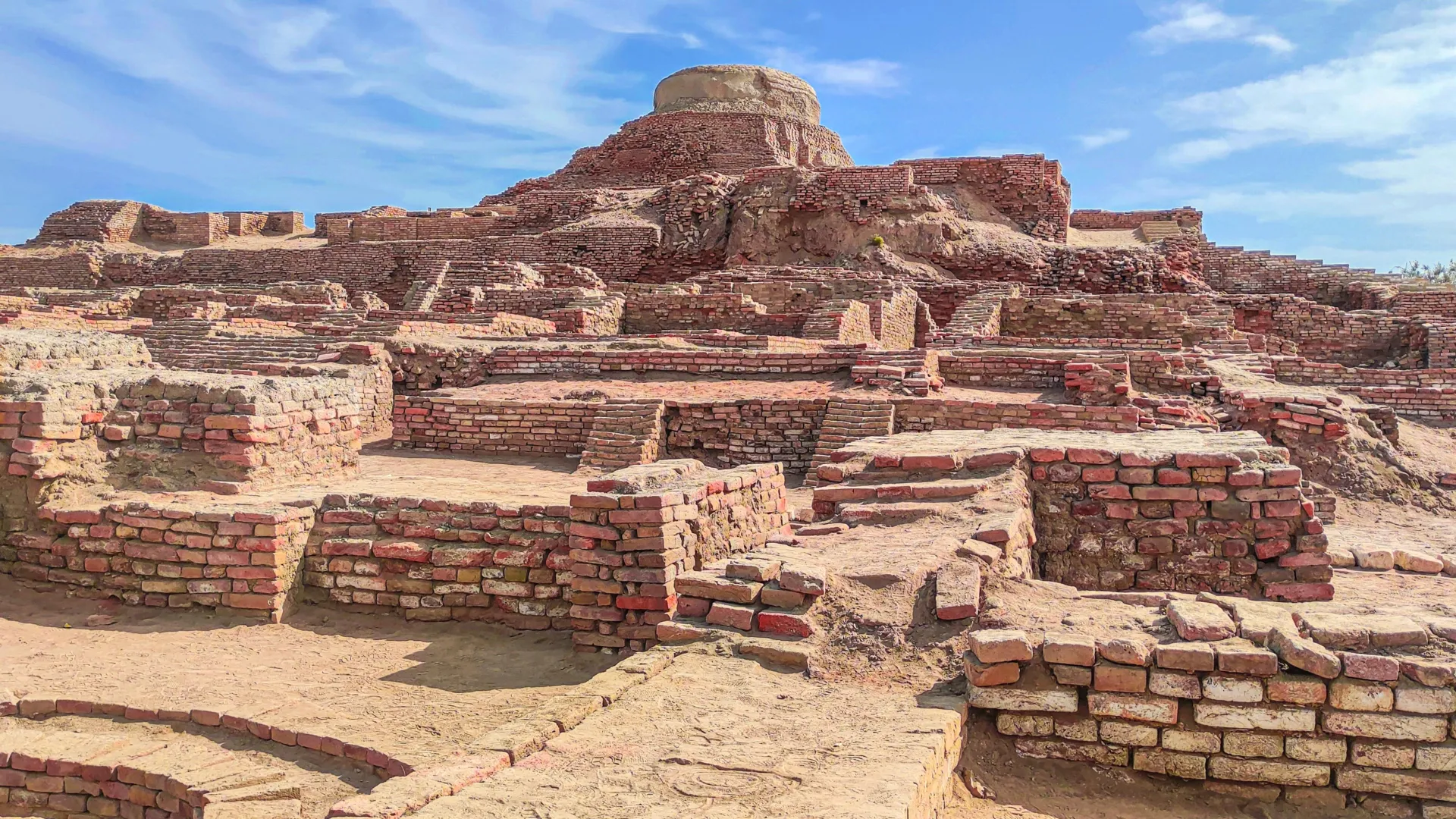
As Mohenjo-daro prospered, the gap between its richest and poorest households actually shrank. Its shared infrastructure, fair trade systems, and lack of powerful royal elites suggest that equality may have helped fuel the ancient city’s success.
As Mohenjo-daro prospered, the gap between its richest and poorest households actually shrank. Its shared infrastructure, fair trade systems, and lack of powerful royal elites suggest that equality may have helped fuel the ancient city’s success.
Ok, sure.
Civilization is not a moral judgment, or at least it shouldn’t be, although people have historically used it in such a way. In reality, civilization is a political and economic condition or state of development. Morality doesn’t come into the picture at all. Neolithic societies were objectively less civilized than bronze age societies, because their economic and political structures were more rudimentary.
Unfortunately, although I don’t necessarily want to, I have to disagree that hierarchy is not natural or necessary in human societies. I’ve always wanted to believe in egalitarianism and fight against hierarchy, but the vast majority of evidence indicates that human societies have always been hierarchical to some extent, and indeed that they cannot function without some form of hierarchy. Hierarchical societies likely predate civilization and the human species entirely. Chimpanzee troops, and the societies of nearly any given social mammalian species, are hierarchical as well, although obviously on a much smaller scale than civilized human societies.
It’s perhaps possible to make the argument that hierarchies are not necessary under certain conditions, but to argue that they are not natural is clearly and obviously wrong.
Well, that’s both demobilising and sad. I know honesty, realism and all that but somehow can’t stop thinking - there are forces building myths about glorious past, great golden ages of ancestors where the small listened and worshipped the GOOD elites and perfect prophets/sons of god. And they are very successful. Can’t we have A LITTLE hope?
The relationship between elites and non-elites doesn’t necessarily need to be exploitative. There should be a give and take that is currently lacking in our society. Nor does the discrepancy need to be so stark; in reality there is always a spectrum of capabilities and responsibilities in society. For instance, who are the elites of the 21st century? Is it only the politicians and billionaires? Doesn’t it also include the educated class of first world countries? Doctors, lawyers, corporate bureaucrats, academics, engineers, IT specialists, journalists, etc? All of those groups are crucial parts in implementing the oppressive systems that the elites preside over. You could go even further if you’d like and include anybody who has a job, or anybody who resides in a developed country without actively trying to revolt against the system. From the perspective of the global poor, that’s an entirely valid position to take.
When we reduce our understanding of society to a simple dichotomy of elites exploiting the rest of us, we fail to comprehend the problem, and thus we fail to produce adequate solutions. We are all more a part of the problem than we would like to admit, but the counterpart to that fact is that we are all more capable of being a part of the solution that we realize. The people sitting at the very top would not have the ability to exploit people as they do without utilizing the vast number of educated professionals and skilled workers who make their schemes possible. This is linked to the fact that simply removing the worst and most powerful elites never seems to get us anywhere, because there are always people sitting directly beneath them in the vast sociopolitical hierarchy who have already been groomed to take their place.
tangent
But as I was saying initially about the give and take. Historically, there have been some pretty major downsides to being part of an elite class, namely that if your tribe/kingdom/empire gets defeated, whether by internal or external forces, you get killed. Whereas the common people would be able to survive under the new regime. New boss, same as the old boss kinda deal. In hereditary systems of power exchange, the aristocracy often exists under tremendous pressure, where they lack the freedom to even marry the person they love, let alone follow their dreams or anything of the sort. The heir to the throne would rarely have a choice to avoid their fate, because to renounce the throne would likely to result in their death, as the new dynasty would prefer to tie up any loose ends and prevent any future rebellions or restorations. Your family and peers could rarely be your friends, because you could never be sure if they were plotting against you to gain an advantage. The elite classes of modern society also have burdens that they must bear in order to maintain their status, although not so apparently as the monarchs of old.
I’ve gotten onto some major tangets here and haven’t really responded to your comment. To attempt to answer your question, I’d say that the hope lies not in eliminating hierarchies in general, but in reducing them to a manageable level. For instance, the hierarchy of a small town, or a small business, or a sports team, or even a family. People have their roles to play, and some are more crucial than others, but there is a necessity for everyone to work together and it’s possible for people to understand and appreciate other roles and even move between them fairly seamlessly. Obviously that doesn’t mean that smaller hierarchies always function that way, but its possible for them to, and we could theoretically figure out how to optimize them with our current level of knowledge and technology.
It’s the scale and interconnectivity of modern society, and civilization in general, that’s responsible for producing the massively expanded hierarchies that create so much suffering and conflict. Human beings aren’t equipped to deal with such complex arrangements, and thus our inherent instincts for compassion and cooperation are overwhelmed and bypassed.
If one has an elite class that means the society has a higharchy, and last I checked Elites refer to those at the top of a higharchy.