

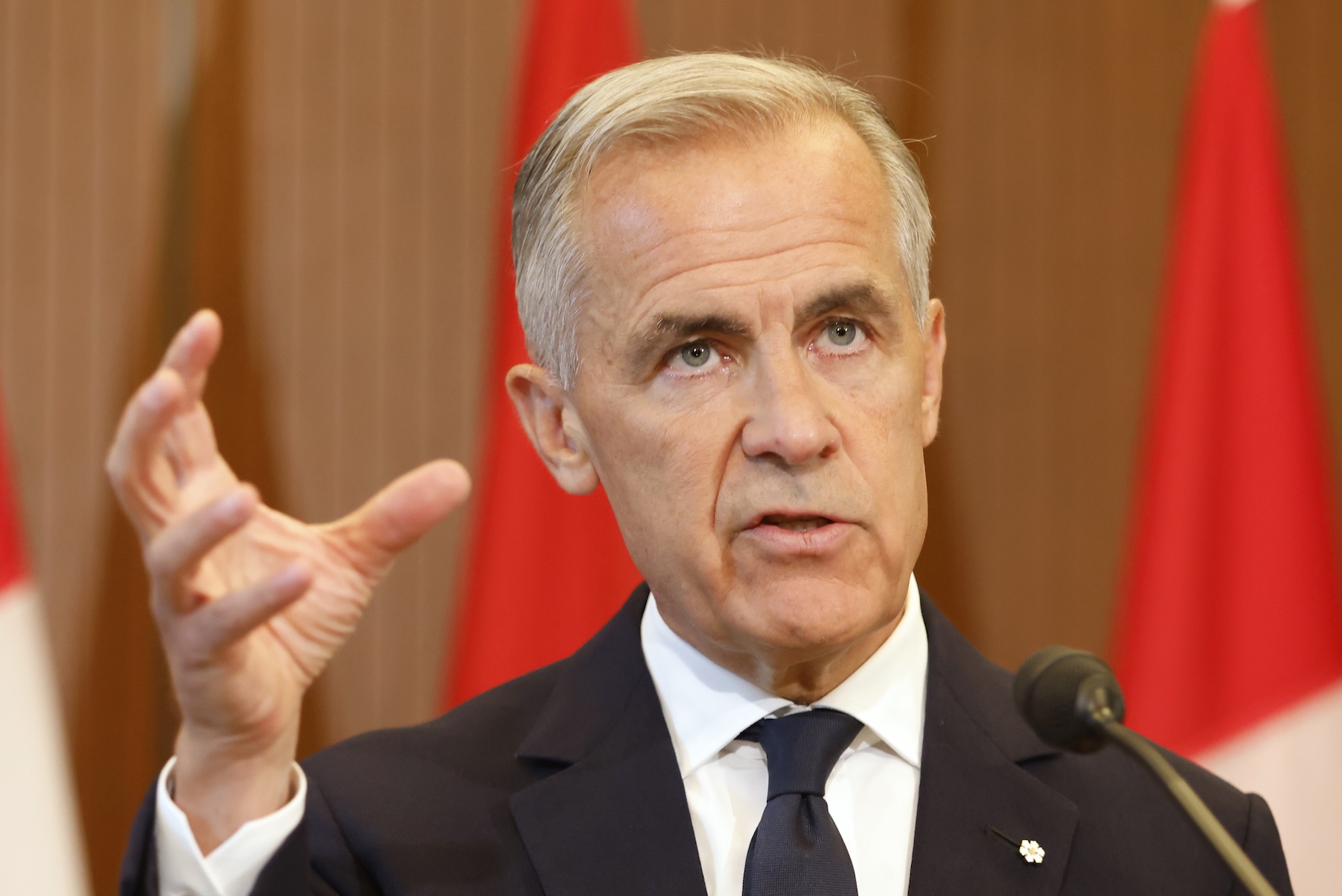
The sombre mien—that’s what stayed with me. On Saturday, Mark Carney looked less like a prime minister briefing media on trade negotiations than a wartime leader telling his country a feared turn had finally arrived and preparing them for a long ordeal. The intense, all-out effort to stop crushing new tariffs had failed, with Carney grimly explaining that the United States insists on “short-term transactions” rather than “long-term partnerships” and that its commitments could no longer be assumed to hold.
American demands reportedly went well beyond tariffs, market access, and sectoral protections. They targeted Canada’s freedom to set domestic cultural policy, interpret agreements it had already signed, and conduct trade relations with third countries. The loss of our sovereignty was too high a price for preserving economic integration. What prime minister would accept Canada becoming a vassal state on his watch? With the collapse of talks, and Carney describing the country as being “attacked,” it’s hard not to feel like we have crossed into a different moment—that we are living in a slightly darker reality.
Throughout the weekend, The Walrus spoke to economists, policy experts, and political observers about what exactly has changed and what this new period might demand of Canada.
Nate Silver uses an aggregate of dozens of polls and weights each one based on numerous factors including historical accuracy and bias.
His model correctly projected Trump win in 2015 even when most polls said otherwise.