Excludes cannabis products and requires both refillable and rechargeable vapes. I get that this lessens the amount going into a landfill, but it doesn’t solve any problem. As long as disposable batteries are on the market, where is the infrastructure to safely recycle or dispose of those batteries?
I am speaking metaphorically. But if you discount tactical victories because you’re waiting for the be-all, end-all solution, you’re going to be waiting for a long time. Every ounce of waste that doesn’t go into landfills today is an ounce we won’t have to deal with tomorrow, and that is a win. Similarly, every legislative action that curbs some small subset of pollution frees up resources to work toward the next small victory. Winning a battle doesn’t mean the war is over, but wars are won by winning battles.
Also not sure what you mean by “changing the system”. Clearly you are dissatisfied by this legislation, but this is changing the system. And large, complicated systems generally change one small change at a time.
I’m dissatisfied that there isn’t a course of action for consumers to recycle or dispose of batteries at their end of use. As I discussed with someone else, I can appreciate that it is a step towards something better, and that is something, but it seems like it will take ongoing catastrophes in waste management to highlight that there needs to be a solution for what someone does with the battery at the end. This needs to be considered.
As am I. And unfortunately, we have an ongoing catastrophe in waste management right now that is largely being ignored, this particular legislation being an all-too-rare exception.
I think it would be quite cool if we could manage a comprehensive standardization of all batteries, and have legislation that requires all devices to use standard removable / replaceable batteries, and have municipal recycling systems where residents could dispose of old batteries of all types with no fee, or even swap an old battery for a new one. Domestic battery reconditioning would provide jobs, reduce waste, and reduce our dependence on foreign minerals. Heck, it might even end up helping device manufacturers in the long term if they can assume that consumers have access to batteries that don’t have to be shipped overseas. Seems like a slam dunk to me.
But, until I become a congressional majority leader, or congress becomes significantly cooler about stuff, I don’t think I have much of a chance of getting that passed. So I settle for smaller wins while I work on getting the big stuff viable.
I don’t understand what you’re saying. How does moving from disposable to refillable and rechargeable not solve any problem? Do you mean completely? It will be a great improvement in any case.
I haven’t read the article. Is there any explanation for why cannabis was excluded? Also, for your comparison to make sense, the vast majority of disposable vapes sold would have to be cannabis. I could be totally wrong, but I’ve never had the impression that there are more cannabis vapers than regular vapers.
Really? I guess my experience is different but I’ve seen way more people using THC vapes than tobacco. That might be skewed and is a small sample size since it’s just me but yeah I could see the market for disposal THC vapes being larger than other vapes.
I mean probably excluded for the same reason things usually are, money and kickbacks. I didn’t read the article either.
Yes, I don’t think I’ve ever actually run into someone using a cannabis vape, but I run into people using regular vapes nearly every day and often multiple times a day.
And yes, excluded because of corruption or some other form of unfair manipulation wouldn’t surprise me either. I’ll try to read the article later because the whole disposable vape thing has been a pet peeve for me.
I know I’m only repeating myself but:
It lessens the problem, but it doesn’t solve anything. There will still be batteries from these devices thrown in the trash (many of them,) and there’s no infrastructure to actually recycle or dispose of these things.
I get what you mean now. You mean adequately and fully solve the issue as opposed to reduce it. I can’t argue with that, but just think that like that saying goes, we shouldn’t let the perfect be the enemy of the good.
Also, how do any rechargeable batteries for any device (like mobile phones, for instance) get recycled now, and why can’t these batteries be recycled the same way if the batteries were collected in the same way as those other devices’ batteries?
Exactly. I do appreciate that this will help reduce some waste, but without addressing the actual problem of recycling those batteries, lessening the impact isn’t getting us very far.
I agree with you that this is a start, and that’s something, but it’s missing the point. Perhaps ongoing issues with batteries in landfills will indicate that more needs to be done.
Right, this is a step forward. The next step would be to require either a) all devices with batteries have user-replaceable batteries, b) a deposit system similar to aluminum cans but much higher value, to incentivize people to return the devices (or batteries) instead of tossing them in the trash, or, ideally, both a and b.


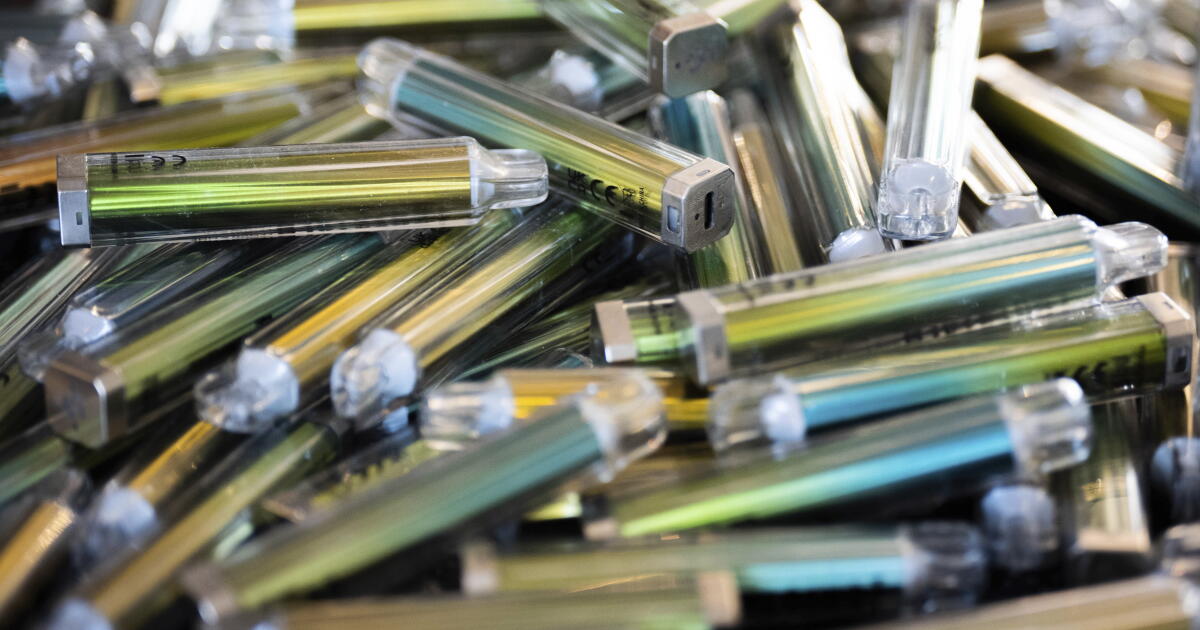
Excludes cannabis products and requires both refillable and rechargeable vapes. I get that this lessens the amount going into a landfill, but it doesn’t solve any problem. As long as disposable batteries are on the market, where is the infrastructure to safely recycle or dispose of those batteries?
How do you eat a whale?
Just to make my Thai friends laugh, I should have responded:
Fried?
False. I let the whale eat me.
Oh, I know this joke.
With a knife and fork.
With a paper straw?
You change the system because you know that eating whales is wrong. You don’t just hack off the fins and call it a win.
I am speaking metaphorically. But if you discount tactical victories because you’re waiting for the be-all, end-all solution, you’re going to be waiting for a long time. Every ounce of waste that doesn’t go into landfills today is an ounce we won’t have to deal with tomorrow, and that is a win. Similarly, every legislative action that curbs some small subset of pollution frees up resources to work toward the next small victory. Winning a battle doesn’t mean the war is over, but wars are won by winning battles.
Also not sure what you mean by “changing the system”. Clearly you are dissatisfied by this legislation, but this is changing the system. And large, complicated systems generally change one small change at a time.
I’m dissatisfied that there isn’t a course of action for consumers to recycle or dispose of batteries at their end of use. As I discussed with someone else, I can appreciate that it is a step towards something better, and that is something, but it seems like it will take ongoing catastrophes in waste management to highlight that there needs to be a solution for what someone does with the battery at the end. This needs to be considered.
As am I. And unfortunately, we have an ongoing catastrophe in waste management right now that is largely being ignored, this particular legislation being an all-too-rare exception.
I think it would be quite cool if we could manage a comprehensive standardization of all batteries, and have legislation that requires all devices to use standard removable / replaceable batteries, and have municipal recycling systems where residents could dispose of old batteries of all types with no fee, or even swap an old battery for a new one. Domestic battery reconditioning would provide jobs, reduce waste, and reduce our dependence on foreign minerals. Heck, it might even end up helping device manufacturers in the long term if they can assume that consumers have access to batteries that don’t have to be shipped overseas. Seems like a slam dunk to me.
But, until I become a congressional majority leader, or congress becomes significantly cooler about stuff, I don’t think I have much of a chance of getting that passed. So I settle for smaller wins while I work on getting the big stuff viable.
I don’t understand what you’re saying. How does moving from disposable to refillable and rechargeable not solve any problem? Do you mean completely? It will be a great improvement in any case.
Excludes cannabis. May as well be banning adult diapers when the problem is all disposable diapers.
I haven’t read the article. Is there any explanation for why cannabis was excluded? Also, for your comparison to make sense, the vast majority of disposable vapes sold would have to be cannabis. I could be totally wrong, but I’ve never had the impression that there are more cannabis vapers than regular vapers.
Really? I guess my experience is different but I’ve seen way more people using THC vapes than tobacco. That might be skewed and is a small sample size since it’s just me but yeah I could see the market for disposal THC vapes being larger than other vapes.
I mean probably excluded for the same reason things usually are, money and kickbacks. I didn’t read the article either.
Yes, I don’t think I’ve ever actually run into someone using a cannabis vape, but I run into people using regular vapes nearly every day and often multiple times a day.
And yes, excluded because of corruption or some other form of unfair manipulation wouldn’t surprise me either. I’ll try to read the article later because the whole disposable vape thing has been a pet peeve for me.
Could you clarify what you’re not understanding?
I know I’m only repeating myself but: It lessens the problem, but it doesn’t solve anything. There will still be batteries from these devices thrown in the trash (many of them,) and there’s no infrastructure to actually recycle or dispose of these things.
I get what you mean now. You mean adequately and fully solve the issue as opposed to reduce it. I can’t argue with that, but just think that like that saying goes, we shouldn’t let the perfect be the enemy of the good.
Also, how do any rechargeable batteries for any device (like mobile phones, for instance) get recycled now, and why can’t these batteries be recycled the same way if the batteries were collected in the same way as those other devices’ batteries?
Exactly. I do appreciate that this will help reduce some waste, but without addressing the actual problem of recycling those batteries, lessening the impact isn’t getting us very far.
I agree with you that this is a start, and that’s something, but it’s missing the point. Perhaps ongoing issues with batteries in landfills will indicate that more needs to be done.
Right, this is a step forward. The next step would be to require either a) all devices with batteries have user-replaceable batteries, b) a deposit system similar to aluminum cans but much higher value, to incentivize people to return the devices (or batteries) instead of tossing them in the trash, or, ideally, both a and b.
These are great ideas!
Thanks! :) Maybe I should run for office, but I don’t hold the illusion that I would be able to change these things.
deleted by creator