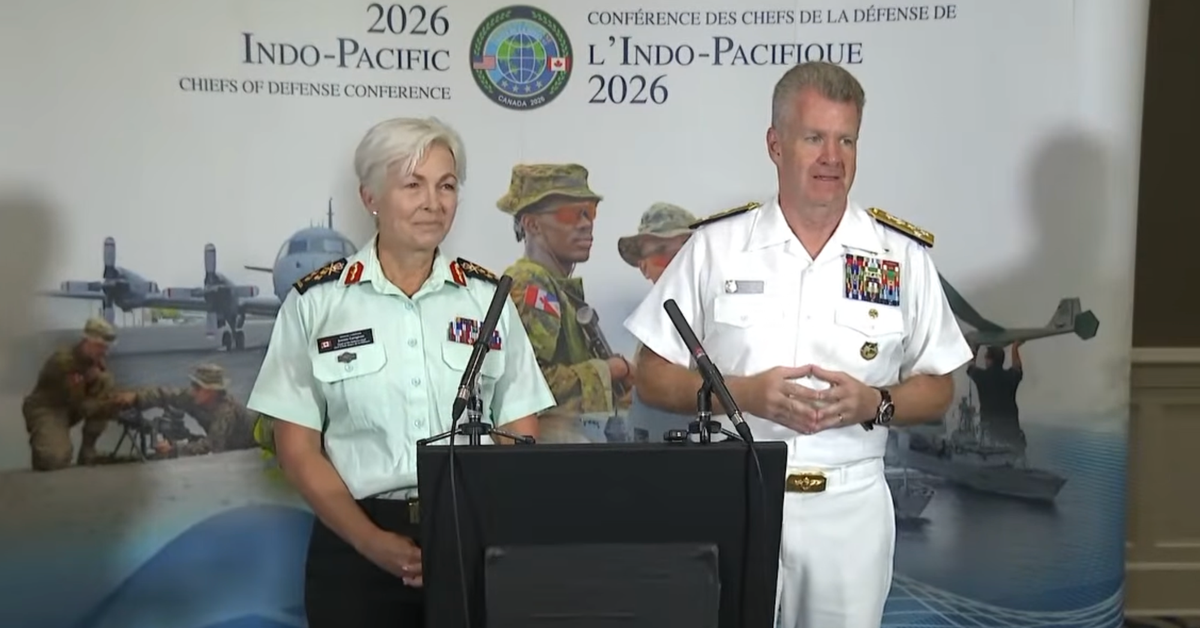
Paparo, who serves as U.S. commander for the Indo-Pacific region, visibly took issue with the question. He said: “I find that scenario to be absolutely and utterly preposterous.”
He added: “I follow the orders of the commander-in-chief, but that is a needlessly emotional question.”
Look at his left chest - a billboard of medals and citations. He didn’t get those by giving the wrong answer, or by basing his statements or actions on his personal opinion. His ‘preposterous’ statement would be a statement of fact, not a statement of opinion. Here are some of the facts that are behind the factual ‘preposterous’ statement.
Any order that comes down the chain of command, keeps going down the chain of command. At every step of the way, the officers would have the option to follow the order by ‘advancing to the rear’.
From Google AI: Presumption of Legality: Routine orders carry a legal presumption of lawfulness, and a soldier must obey normal commands. However, that presumption breaks down when an order directs an overt, clear violation of domestic or international law (such as targeting unresisting civilians).
Also: The defense of “just following orders” (historically known as the Nuremberg defense) is not legally valid in the US military. If a soldier carries out an order that a person of “ordinary sense” would know is illegal—such as executing a surrendered enemy combatant—the soldier can be criminally prosecuted alongside the officer who gave the command.
Also: The Supremacy Clause: Article VI of the Constitution states that treaties made by the United States are part of the “supreme law of the land.”
Treaty Conflicts: If the U.S. has a formal treaty or defense pact with an ally, attacking that ally could violate U.S. treaty commitments, which hold the status of federal law.
Since both countries are members of NATO, any order to attack Canada from the Commander-in-Chief could easily be interpreted up and down the chain of command as an illegal order. This would put every soldier in the predicament of possibly being prosecuted for obeying such an order, right up and down the entire chain of command. It also presents the possibility of the POTUS being charged and convicted of the crime of issuing an illegal order. Thus, answering the question as stated is factually ‘preposterous’. The POTUS could not, as Commander-in-Chief, be reasonably seen as being able to give a legal order to attack Canada.
But it is also very clear that he is indirectly accusing Trump of being needlessly emotional in even insinuating the possibility that Trump could give such an illegal order.
You really shouldn’t trust the legal interpretations of an LLM. They’re frequently wrong, and, even more dangerously, they’re very, very good at making a wrong answer look right.
In this case, it does seem to be correct, though. The treaty clause has nuances in the way it’s interpreted, but according to the article they’re considered roughly equivalent to federal law. (Sorry for overlooking that and answering wrong elsewhere)
There’s still catches. Prosecution for following unlawful orders is light, and often rests on charging a perpetrator as if they were a private citizen. Violating an international treaty regarding diplomacy doesn’t really have much in the way of criminal penalties, and, even if they did, the NATO treaty doesn’t seem to have a “don’t attack other members” article. Like, it should, but it also doesn’t have a “remove members that attacked other members” clause, because that basically just wasn’t relevant when it was created. (BTW, looking over it, the US is already openly violating article 1 and part of 2)
But sure, if this guy refused to invade Canada, and was court martialled for it, it seems like he’d have a defence.
I have actually researched this in depth. The issue at the time was Greenland, not Canada, but the general principle still applies. Denmark is a NATO country. Article 1 clearly states that all disputes between members are to be resolved peacefully through negotiations. Here is an article discusses it in more depth.
Here is a rigorous legal clarification on the issue, that I am sure the general concept is familiar to all senior officers in the American armed forces.
I sincerely doubt that an officer that has achieved his rank, position. and status would not be aware of all of these considerations when he claimed that the scenario was ‘preposterous’. I am sure these issues, given Trump’s emotional statements, have been thoroughly explored by officers in his, and more senior, positions. Their response to such an order would not be a knee jerk off the cuff on the spot response, but a response that has been well planned out and thoroughly vetted ahead of time.
Dude, if your commander orders you to invade Canada, hate to break it to you, but that’s lawful. Now if they tell you to use chemical weapons or target civilians you can push back on that. The law they are referring to is United States law and a couple of conventions like the Hague and Geneva conventions which cover war crimes. Other international law doesn’t count. Nato treaties don’t mean boo when it comes to the lawfulness of orders, nor should they.
No it is not. The Supreme Court of the United States made that perfectly clear. The NATO treaty is the Law of the Land. The POTUS can not ignore it. America can not by law attack a country that has a peace treaty.
There are no more laws in the US when it comes to what POTUS wants. trump can order the military to invade Canada (which is his constitutional power that grants him full immunity when he uses it), simultaneously issue a lifetime pardon for all US military service members, and no US court can legally prosecute anyone involved. The only hope is the Hague where I hope all living US presidents eventually end up.

I think he made it very clear as to what the military response would be if Trump ordered an invasion of Canada. The military pledges allegiance to the Constitution, not to the POTUS. He can only grant immunity to offenses against the United States. Murder is prosecuted at the state level. He can not offer blanket immunity in any case,and he cannot grant immunity ‘going forward’. This officer of the American armed forces has obviously done his due diligence, and has made a statement based on sound facts. He chose his wording carefully. Trump can not issue a legal order to attack Canada, and the officers collectively will refuse to follow an order that is not legal. End of discussion, as he made clear. Trump has obviously been made aware of that, given his concerns that the issue has become ‘overly emotional’.
Look at his left chest - a billboard of medals and citations. He didn’t get those by giving the wrong answer, or by basing his statements or actions on his personal opinion. His ‘preposterous’ statement would be a statement of fact, not a statement of opinion. Here are some of the facts that are behind the factual ‘preposterous’ statement.
Any order that comes down the chain of command, keeps going down the chain of command. At every step of the way, the officers would have the option to follow the order by ‘advancing to the rear’.
Since both countries are members of NATO, any order to attack Canada from the Commander-in-Chief could easily be interpreted up and down the chain of command as an illegal order. This would put every soldier in the predicament of possibly being prosecuted for obeying such an order, right up and down the entire chain of command. It also presents the possibility of the POTUS being charged and convicted of the crime of issuing an illegal order. Thus, answering the question as stated is factually ‘preposterous’. The POTUS could not, as Commander-in-Chief, be reasonably seen as being able to give a legal order to attack Canada.
But it is also very clear that he is indirectly accusing Trump of being needlessly emotional in even insinuating the possibility that Trump could give such an illegal order.
You really shouldn’t trust the legal interpretations of an LLM. They’re frequently wrong, and, even more dangerously, they’re very, very good at making a wrong answer look right.
In this case, it does seem to be correct, though. The treaty clause has nuances in the way it’s interpreted, but according to the article they’re considered roughly equivalent to federal law. (Sorry for overlooking that and answering wrong elsewhere)
There’s still catches. Prosecution for following unlawful orders is light, and often rests on charging a perpetrator as if they were a private citizen. Violating an international treaty regarding diplomacy doesn’t really have much in the way of criminal penalties, and, even if they did, the NATO treaty doesn’t seem to have a “don’t attack other members” article. Like, it should, but it also doesn’t have a “remove members that attacked other members” clause, because that basically just wasn’t relevant when it was created. (BTW, looking over it, the US is already openly violating article 1 and part of 2)
But sure, if this guy refused to invade Canada, and was court martialled for it, it seems like he’d have a defence.
I have actually researched this in depth. The issue at the time was Greenland, not Canada, but the general principle still applies. Denmark is a NATO country. Article 1 clearly states that all disputes between members are to be resolved peacefully through negotiations. Here is an article discusses it in more depth.
https://www.nato.int/en/about-us/official-texts-and-resources/official-texts/1956/12/11/resolution-on-the-peaceful-settlement-of-disputes-and-differences-between-members-of-the-north-atlantic-treaty-organization
Here is a rigorous legal clarification on the issue, that I am sure the general concept is familiar to all senior officers in the American armed forces.
https://www.court-martial.com/blog/obeying-orders-breaking-the-law-the-limits-of-the-superior-orders-defense/
And here is a legal brief on the principle that a peace treaty is the Law of the Land.
https://law.justia.com/constitution/us/article-2/16-treaties-as-law-of-the-land.html
I sincerely doubt that an officer that has achieved his rank, position. and status would not be aware of all of these considerations when he claimed that the scenario was ‘preposterous’. I am sure these issues, given Trump’s emotional statements, have been thoroughly explored by officers in his, and more senior, positions. Their response to such an order would not be a knee jerk off the cuff on the spot response, but a response that has been well planned out and thoroughly vetted ahead of time.
Dude, if your commander orders you to invade Canada, hate to break it to you, but that’s lawful. Now if they tell you to use chemical weapons or target civilians you can push back on that. The law they are referring to is United States law and a couple of conventions like the Hague and Geneva conventions which cover war crimes. Other international law doesn’t count. Nato treaties don’t mean boo when it comes to the lawfulness of orders, nor should they.
No it is not. The Supreme Court of the United States made that perfectly clear. The NATO treaty is the Law of the Land. The POTUS can not ignore it. America can not by law attack a country that has a peace treaty.
There are no more laws in the US when it comes to what POTUS wants. trump can order the military to invade Canada (which is his constitutional power that grants him full immunity when he uses it), simultaneously issue a lifetime pardon for all US military service members, and no US court can legally prosecute anyone involved. The only hope is the Hague where I hope all living US presidents eventually end up.
I think he made it very clear as to what the military response would be if Trump ordered an invasion of Canada. The military pledges allegiance to the Constitution, not to the POTUS. He can only grant immunity to offenses against the United States. Murder is prosecuted at the state level. He can not offer blanket immunity in any case,and he cannot grant immunity ‘going forward’. This officer of the American armed forces has obviously done his due diligence, and has made a statement based on sound facts. He chose his wording carefully. Trump can not issue a legal order to attack Canada, and the officers collectively will refuse to follow an order that is not legal. End of discussion, as he made clear. Trump has obviously been made aware of that, given his concerns that the issue has become ‘overly emotional’.
Since when did they give a shit about things like law?
Since he can be imprisoned upon conviction, and conviction is a certainty.