So you expect every business in the country to have train tracks pull right up to it?
Plenty of freight already moves by trains, planes, boats, etc. but that doesn’t move it the final mile(s) that it needs to go to make it to a business…
This is true, but everyone got comfortable with a semi driving from one side of the country to the other. I can tell you it’s no longer viable. Brace yourself for the impact I guess?
last mile can be up to 100 miles away from the distribution center. along rural routes that may not see a public building like a gas station the entire trip.
the thing I think Europeans cannot comprehend is the volume of space the US has. I used to drive two hours, one-way, for my job because that’s just where I worked. there was no public transit because my town had a population of under 1000 people. it took 30 minutes to go to the grocery store.
Thats fair as a European I indeed have no idea how to even think of distribution in that scale. But surely the overwhelming majority of last mile transportation occurs in the large cities: where trains can be a replacement for city to city transport.
You put the distribution centers near train stops (yes sometimes with direct rail connections) and then your trucking needs are limited to local distribution. Last mile mechanisms can vary based on product, commercial density, and infrastructure, but often are well served with a greater number of smaller vehicles.
That’s more or less what they do today, because it makes a lot more sense to have central distribution centers. But that still doesn’t change the fact that you need a truck/van/car/bicycle for last mile transportation.

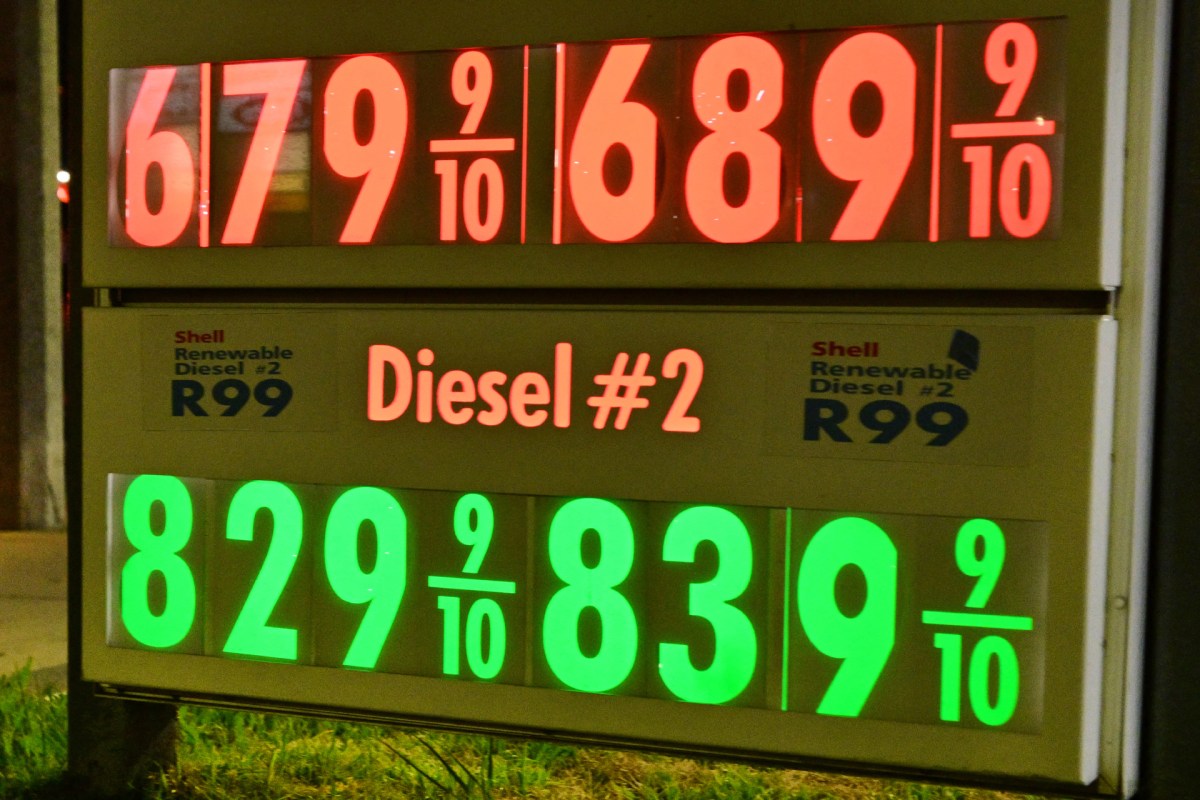
Sweet. Trains are the way to go
Bancrupt companies will be bought by larger ones, over time consolidating power and monopolizing the market.
Yea, this isn’t the win it sounds like. In times of crisis, the rich get richer and the poor gets poorer.
So you expect every business in the country to have train tracks pull right up to it?
Plenty of freight already moves by trains, planes, boats, etc. but that doesn’t move it the final mile(s) that it needs to go to make it to a business…
This is true, but everyone got comfortable with a semi driving from one side of the country to the other. I can tell you it’s no longer viable. Brace yourself for the impact I guess?
That’s actually a pretty good idea to aim for eventually, yes.
Final mile is probably a lot cheaper to buy fuel for.
Wait till you hear of the bakfiets
Coolblue is a computer shop.
I’ll just hop on my scooter and transport, checks freight manifest, 20 tons of product.
that won’t be so bad over my, checks delivery address, 60 mile route.
They use standard electric vans where the route is too far. But in high density areas a van stops making sense.
My comment was on a comment about last mile.
last mile can be up to 100 miles away from the distribution center. along rural routes that may not see a public building like a gas station the entire trip.
the thing I think Europeans cannot comprehend is the volume of space the US has. I used to drive two hours, one-way, for my job because that’s just where I worked. there was no public transit because my town had a population of under 1000 people. it took 30 minutes to go to the grocery store.
these are normal things in the US.
what works in Europe won’t always work in the US.
Most people live in cities. Even in the US.
Thats fair as a European I indeed have no idea how to even think of distribution in that scale. But surely the overwhelming majority of last mile transportation occurs in the large cities: where trains can be a replacement for city to city transport.
Can someone stop downvoting GreenKnight there’s no need for that.
Cross country? yes. Last mile? No, traintracks to every single company in need of transportation doesn’t make sense.
You put the distribution centers near train stops (yes sometimes with direct rail connections) and then your trucking needs are limited to local distribution. Last mile mechanisms can vary based on product, commercial density, and infrastructure, but often are well served with a greater number of smaller vehicles.
That’s more or less what they do today, because it makes a lot more sense to have central distribution centers. But that still doesn’t change the fact that you need a truck/van/car/bicycle for last mile transportation.
They used to exist, historically.
Give your big brain a rest. 🤤
You know the US is doing great when “return to rail barons” is just actually a more sustainable paradigm.