There’s a really weird misconception about Amtrak and U.S. railroads.
Amtrak is not some ordinary private corporation. It is a federally chartered corporation, with the federal government as its controlling shareholder. Its board is largely made up of presidential appointees who require Senate confirmation. So, functionally, Amtrak is a government-controlled corporation that happens to operate as a for-profit company.
The stranger part is the infrastructure underneath it.
The vast majority of Amtrak’s route mileage runs on tracks owned by private freight railroads. Those freight railroads are enormously important to the U.S. economy, but the industry is also highly consolidated. A handful of Class I railroads control enormous regional networks, creating what is essentially a series of geographic monopolies/oligopolies. Amtrak itself says 97% of its route-miles operate over tracks owned by other railroads.
So you end up with this bizarre situation where the federal government owns and controls the country’s principal intercity passenger railroad, but much of the physical railroad infrastructure it depends on is privately owned.
And expanding passenger rail isn’t as simple as “just build more trains.” You need track capacity, signaling, bridges, grade crossings, stations, dispatching capacity, maintenance facilities, etc. In many places, you’re trying to add passenger service to infrastructure that is already being used by private freight companies. Amtrak frequently doesn’t even control dispatching on the tracks it operates over.
That’s why the U.S. rail situation is so strange. We have an enormous private freight-rail system that is absolutely critical to the economy, a federally controlled passenger railroad, and an infrastructure network that has been extraordinarily difficult and expensive to expand and modernize.
It’s not simply “the government sucks at trains” or “private companies suck at trains.” The institutional arrangement itself is bizarre. The U.S. essentially split passenger and freight rail into two different systems while leaving much of the underlying infrastructure in private hands.
And then everyone wonders why building modern passenger rail is so damn difficult.


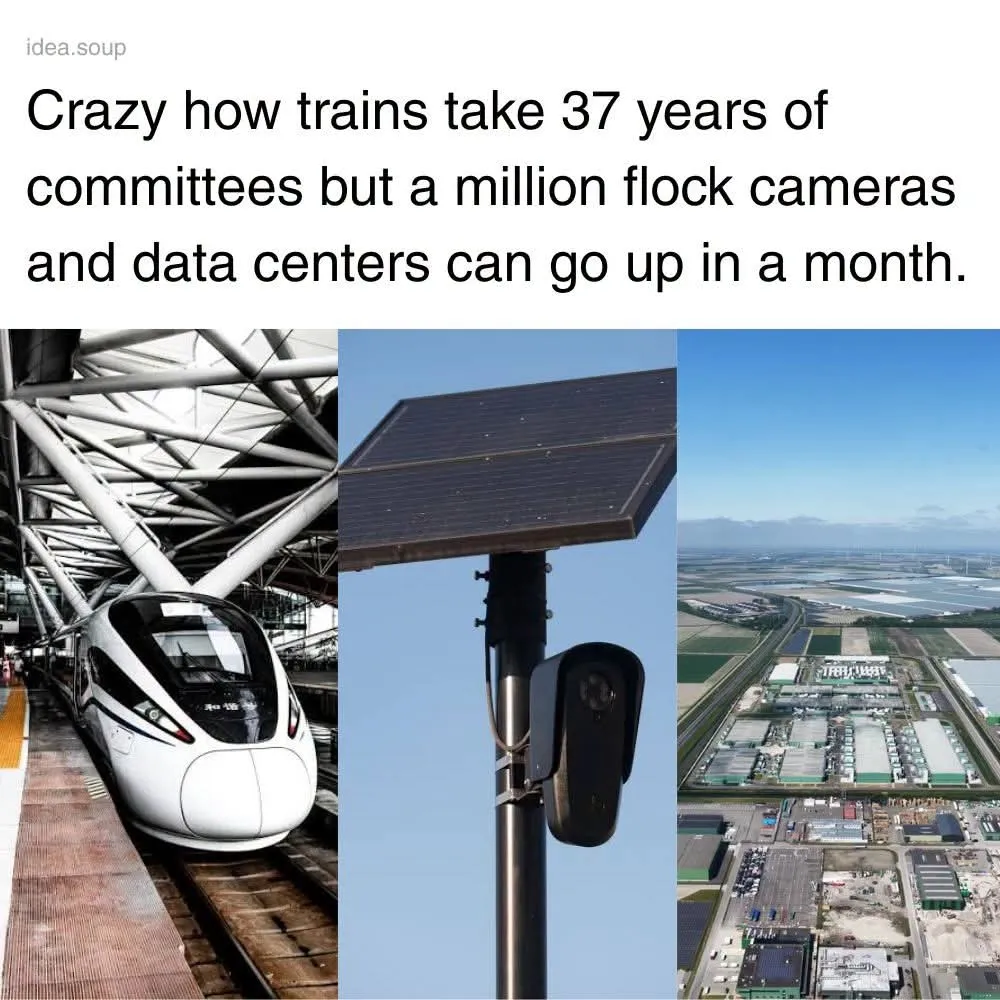
There’s a really weird misconception about Amtrak and U.S. railroads.
Amtrak is not some ordinary private corporation. It is a federally chartered corporation, with the federal government as its controlling shareholder. Its board is largely made up of presidential appointees who require Senate confirmation. So, functionally, Amtrak is a government-controlled corporation that happens to operate as a for-profit company.
The stranger part is the infrastructure underneath it.
The vast majority of Amtrak’s route mileage runs on tracks owned by private freight railroads. Those freight railroads are enormously important to the U.S. economy, but the industry is also highly consolidated. A handful of Class I railroads control enormous regional networks, creating what is essentially a series of geographic monopolies/oligopolies. Amtrak itself says 97% of its route-miles operate over tracks owned by other railroads.
So you end up with this bizarre situation where the federal government owns and controls the country’s principal intercity passenger railroad, but much of the physical railroad infrastructure it depends on is privately owned.
And expanding passenger rail isn’t as simple as “just build more trains.” You need track capacity, signaling, bridges, grade crossings, stations, dispatching capacity, maintenance facilities, etc. In many places, you’re trying to add passenger service to infrastructure that is already being used by private freight companies. Amtrak frequently doesn’t even control dispatching on the tracks it operates over.
That’s why the U.S. rail situation is so strange. We have an enormous private freight-rail system that is absolutely critical to the economy, a federally controlled passenger railroad, and an infrastructure network that has been extraordinarily difficult and expensive to expand and modernize.
It’s not simply “the government sucks at trains” or “private companies suck at trains.” The institutional arrangement itself is bizarre. The U.S. essentially split passenger and freight rail into two different systems while leaving much of the underlying infrastructure in private hands.
And then everyone wonders why building modern passenger rail is so damn difficult.
We basically do need to eminent domain the rail network. That should be government owned like the highways.