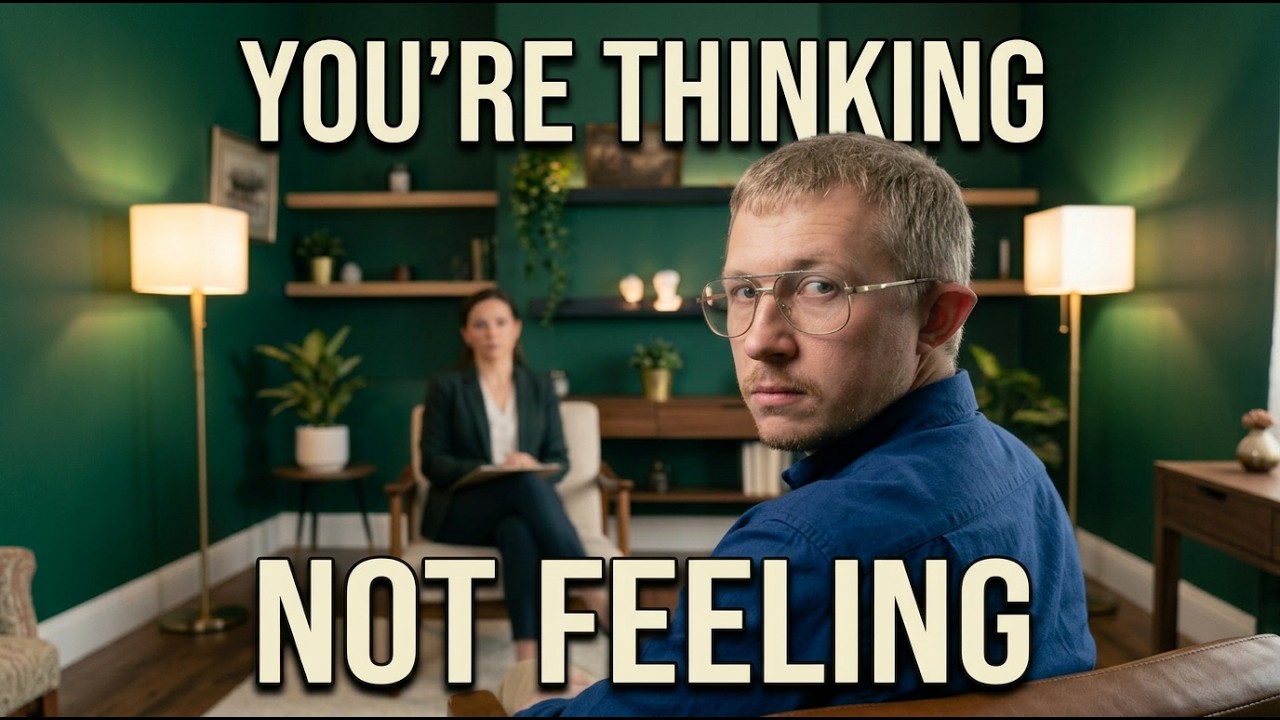
You can understand your anxiety perfectly and still feel trapped by it.In this episode. We break down why highly analytical people often get stuck in therap...
@naught101 A focus on “causes” tends to essentially create a confirmation bias. A focus on mental hygiene tends towards mental hygiene. Make your bed, brush your teeth, take a walk, do all of those basic, quietly life-affirming activities of daily living which almost imperceptibly shift us out of analytical reinforcement of our “problems” and into experiential reinforcement of life’s simple joys.
Not everyone has a bed to make, a sink where they can brush their teeth, teeth to brush…
CBT didn’t really work for me. I think my analytical thinking overlapped a lot with it, so naturally that’s not going to resolve issues for me. Asking my anxious brain to keep exploring and rationalizing the anxiety space is what it felt like
Therapy that required digging into and accepting plus engaging with my feelings was much much better for me, and have me much healthier strategies.
This works for me too. Being overly analytical about your feelings overlaps a lot with rumination which is like letting the cogs in your brain use up energy to go nowhere (and in my controversial opinion, depression is a core symptom of low energy not a standalone disorder). Practicing mindfulness with gratitude is more grounding to be able to feel your emotions and understand what your body is trying to tell you rather than “analyze” why your body isn’t listening to your orders. Regarding the gratitude part, I prefer to do it in nature and feel lucky to be alive to experience its beauty.

@naught101 A focus on “causes” tends to essentially create a confirmation bias. A focus on mental hygiene tends towards mental hygiene. Make your bed, brush your teeth, take a walk, do all of those basic, quietly life-affirming activities of daily living which almost imperceptibly shift us out of analytical reinforcement of our “problems” and into experiential reinforcement of life’s simple joys.
Not everyone has a bed to make, a sink where they can brush their teeth, teeth to brush…
CBT isn’t a one size fits all approach that people think it is. Adding the “others have it worse” bit at the end is just bad form.
CBT didn’t really work for me. I think my analytical thinking overlapped a lot with it, so naturally that’s not going to resolve issues for me. Asking my anxious brain to keep exploring and rationalizing the anxiety space is what it felt like
Therapy that required digging into and accepting plus engaging with my feelings was much much better for me, and have me much healthier strategies.
This works for me too. Being overly analytical about your feelings overlaps a lot with rumination which is like letting the cogs in your brain use up energy to go nowhere (and in my controversial opinion, depression is a core symptom of low energy not a standalone disorder). Practicing mindfulness with gratitude is more grounding to be able to feel your emotions and understand what your body is trying to tell you rather than “analyze” why your body isn’t listening to your orders. Regarding the gratitude part, I prefer to do it in nature and feel lucky to be alive to experience its beauty.
I’m not sure that relates much to what’s in the YouTube video
@naught101 Seemed pretty directly on point regarding what analysis does versus praxis. ymmv