You must log in or # to comment.
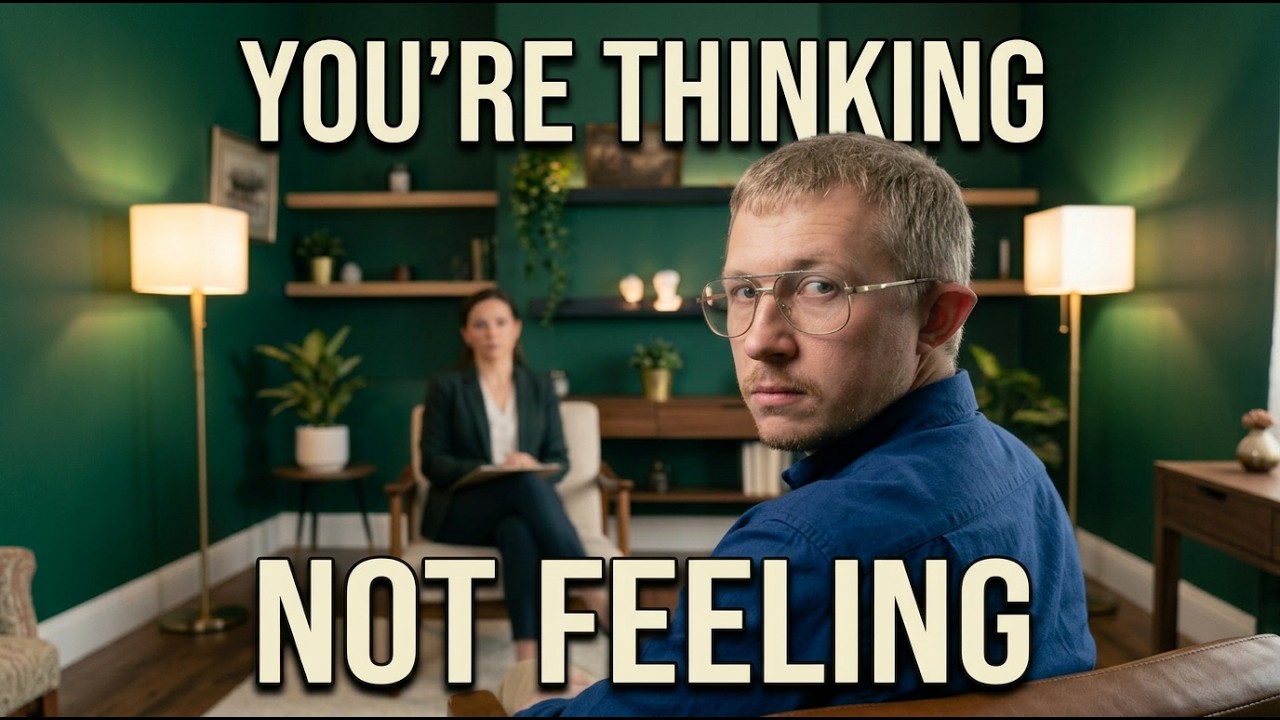
I liked the video because it explains very well what one of my problems apparently is and it seems so difficult to work on it, dammit.
It’s like the times I feel guilty for something and I think of it, know consciously I’m not guilty, but the feeling doesn’t go away, it just get pushed down.
So I have to let the feelings be processed physically, but I’m unable to do things like cry. I’m toast.I didn’t watch but for me therapy fell a little flat because the therapist was so assuring me that I was a good person in various capacities. This stranger who only had my side of the story was asserting that I was doing the right things and should feel good about them. I couldn’t find such an opinion credible, and felt like all they were doing were things I could say to myself but even less credible than me. External reassurances from a stranger trying to override my self doubt just kind of backfired.
It probably works for other kinds of issues, but didn’t really do much for me.
Well while your experience may speak to some people it’s not what the video is about. The video is about people that try to analytically solve their own problems without facing the emotions attached to those problems. Basically using cognitive behavioral therapy on themselves to pretend like the problem is solved without the typical result of CBT which is more emotional than the step-by-step nature of the process.
I had therapists like this but then I finally found a therapist who just got really curious about why I felt that way, what else I felt, what I’d think of others who feel that way, etc etc just really digging quite well into the feeling with various angles etc and all the while trying to notice and point out when I seem to get overwhelmed or worked up about something. That kind of observation and exploration helped me greatly.
forewarning: i did not watch the video and this comment is based on the title and thumbnail.
highly analytical people (from personal experience) who are in therapy are feeling things, a lot. maybe even more than neurotypical people. they have resorted to intellectualizing their feelings in an attempt to understand why they are feeling them, because often ND people struggle to clearly communicate the depths of what they experience and this leads to professionals either not understanding the severity of the issue(s), or simply dont have a framework to relate to their subject adequately.
i am audhd. the severe stress of trying to survive daily life while dealing with my unique issues has led to chronic burnout that manifests in anger outbursts among other thigs. when i tried getting help for this, i was handed a printout explaining the “anger volcano” and literally no other support was given. i have been to at least 5 traditional therapists and none of them have been able to help with this.
so of course i go online. i find groups, i discuss, i add to my personal knowledge library, and i use it to understand myself the best i can. i can’t keep starting over with a new therapist, unload my traumas, and then finding out a month or two into care that my therapist is only able to accommodate people who may have “light trauma” (idk how else to say it).
I’m fairly NT (I think), without much trauma history, and my experience with therapy has been kind of similar. I think this video is probably worth a watch for you. It’s basically arguing that intellectualising is a defence mechanism that prevents proper connection to feelings, and that focusing on the physical aspects of emotions is a way to counteract that. For me, it’s not a solution, but it does provide a partial answer to why therapy hasn’t worked a bunch of times before.
It’s a video about dialectical behavioral therapy for anyone who wants to go down that rabbit hole
Thanks - I don’t know DBT at all really, and I didn’t pick up on that from watching the video. I don’t immediately see the link from skimming the wikipedia page for DBT, but I guess I’m focussing on the wrong thing to pick it up.
DBT is about the “wise mind” of you’re overly analytical you’re not using the wise mind, same with people who are overly emotional (which many overly analytical types actually are) integrating both logic/rationale and emotion into one experience is how you arrive at the wise mind, how you make those decisions is value based not emotion or logic based.
I think you’re confusing feeling any feeling with what you need to feel. Your anger is likely what your other emotions are being filtered through.
You go on to prove the video’s premise to be correct by going online, finding groups, discussing and adding to your knowledge.
deleted by creator
@naught101 A focus on “causes” tends to essentially create a confirmation bias. A focus on mental hygiene tends towards mental hygiene. Make your bed, brush your teeth, take a walk, do all of those basic, quietly life-affirming activities of daily living which almost imperceptibly shift us out of analytical reinforcement of our “problems” and into experiential reinforcement of life’s simple joys.
Not everyone has a bed to make, a sink where they can brush their teeth, teeth to brush…
This works for me too. Being overly analytical about your feelings overlaps a lot with rumination which is like letting the cogs in your brain use up energy to go nowhere (and in my controversial opinion, depression is a core symptom of low energy not a standalone disorder). Practicing mindfulness with gratitude is more grounding to be able to feel your emotions and understand what your body is trying to tell you rather than “analyze” why your body isn’t listening to your orders. Regarding the gratitude part, I prefer to do it in nature and feel lucky to be alive to experience its beauty.
CBT isn’t a one size fits all approach that people think it is. Adding the “others have it worse” bit at the end is just bad form.
CBT didn’t really work for me. I think my analytical thinking overlapped a lot with it, so naturally that’s not going to resolve issues for me. Asking my anxious brain to keep exploring and rationalizing the anxiety space is what it felt like
Therapy that required digging into and accepting plus engaging with my feelings was much much better for me, and have me much healthier strategies.
I’m not sure that relates much to what’s in the YouTube video
@naught101 Seemed pretty directly on point regarding what analysis does versus praxis. ymmv