If you have the materials can avoid taking my word for it. Use a temp gun and check 5 spots or so on a carbon steel pan on the burner. Use a larger pan and smaller burner to exgaerate the effect. Repeat with a copper plate (needs to be at least size of pan bottom, bigger doesn’t seem to detract from effect. You’ll see much more consistent heating. Works for cast iron too - actually more notable at first and the the effect diminishes somewhat as the thick iron holds onto heat and becomes more uniform (still helps though)
Another version that can work is if you have two pans where the bases are both say 5mm, but one of them is all steel while the other is 3mm copper welded to 2mm steel, the copper one should heat up faster than the all steel one. No idea how well copper welds to steel though.


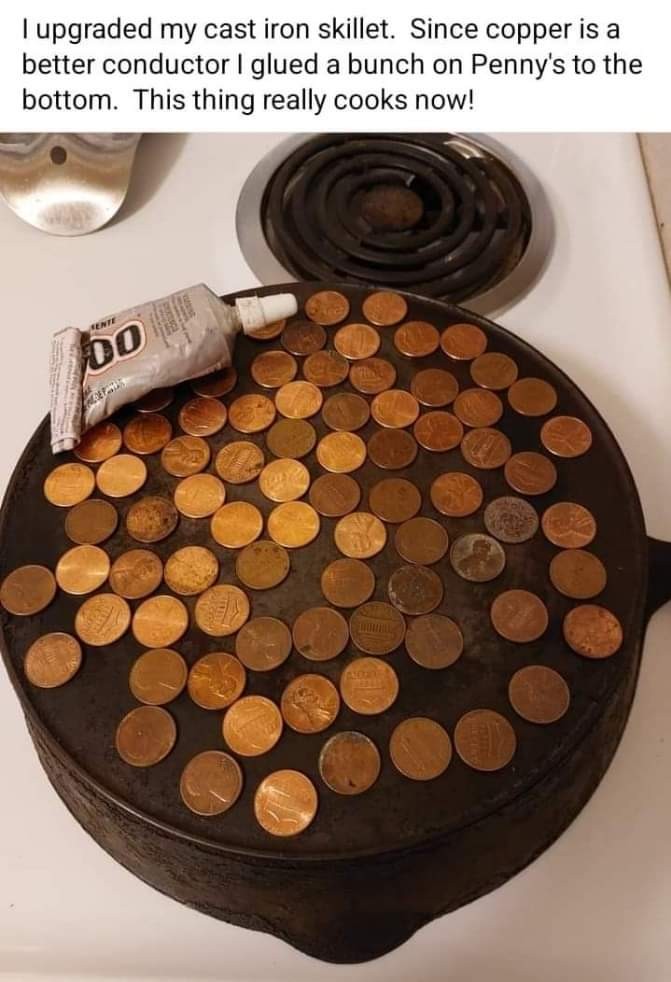
If you have the materials can avoid taking my word for it. Use a temp gun and check 5 spots or so on a carbon steel pan on the burner. Use a larger pan and smaller burner to exgaerate the effect. Repeat with a copper plate (needs to be at least size of pan bottom, bigger doesn’t seem to detract from effect. You’ll see much more consistent heating. Works for cast iron too - actually more notable at first and the the effect diminishes somewhat as the thick iron holds onto heat and becomes more uniform (still helps though)
Oh right! I didn’t realise you were talking about distributing heat more evenly, that’s my bad. Yes I can definitely see that being effective.
Another version that can work is if you have two pans where the bases are both say 5mm, but one of them is all steel while the other is 3mm copper welded to 2mm steel, the copper one should heat up faster than the all steel one. No idea how well copper welds to steel though.
If I remember right, copper-steels welds are horribly difficult unfortunately