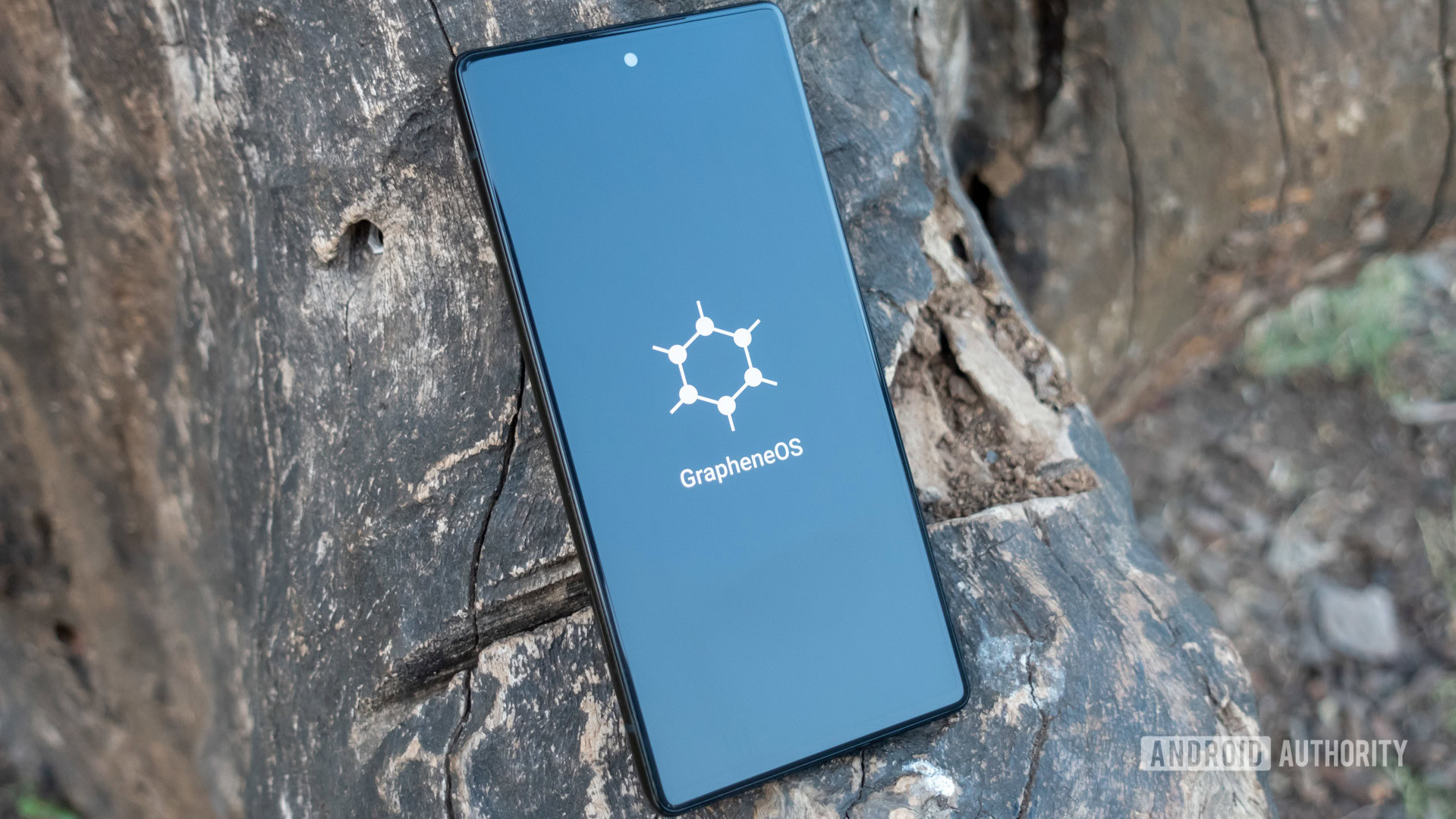
The charge treats the alleged wipe as destruction of property intended to prevent a government seizure.
He is being charged with destroying “evidence” but he was never charged with anything in the first place. That is like saying deleting any files at home is a crime. I’d think forcing you to present evidence necessary to charge you with something would fall under the constitutional right against self-incrimination.
Like resisting arrest when there’s no legal reason you were being detained or arrested?
Unfortunately according to the federal government you automatically consent to limited 4th amendment protections when you choose to fly. Domestic flights have more legal protections, but international flights basically wave your right to privacy.
They are allowed to ask for your phone’s password and do a “non-forensic” search of your phone for just about any reason. A more extensive “forensic” search where they plug your phone into another device can be made if they present reasonable suspicion. If you refuse a search they can hold onto your phone for several weeks.
The smarter move would have been to just refuse to give the password and trust that they wont want to go through the hassle of cracking your phone once it’s in custody.
Basically the only real way to protect yourself is to not keep any incriminating information on your phone. The courts have ruled that these searches only extend to data that can be physically accessed on your device and things like social media and cloud storage are not subject to the search. So it’s just best to save everything on the cloud and then restore it once you are done traveling.
Write the duress PIN on a piece of paper in your wallet. Someone searching your phone is probably also searching your wallet and may try the PIN.
Genius. Flips the script. In the process of conducting an illegal search, you deleted my phone causing considerable financial and emotional damage. Lawsuit time.
It probably won’t work, at least (US)domestically. The requirement for obtaining a warrant before searching a phone is part of training because there is a clear Supreme Court ruling to that effect.
That being said, what the law says and what some random asshole does during a stop are not always the same thing.
Their way around it is they say that the border crossing technically isn’t 100% normal US territory and therefore some constitutional rights are suspended under the concept of “sovereign self-protection”. You could then say any law in the US could be used to justify this concept, in fact it was used to forcibly intern thousands of Japanese and Japanese-Americans during ww2.
He was targeted for purely political reasons, the cop-city environmental protest in Atlanta GA, and I’m wondering why the border officials were even aware of them. Is there some sort of “we don’t like what you think” list run by the gov?
His device was threatened with seizure even though he posed no threat, no visible threat or spoken one, no suspicion of a crime, and they had no idea what the contents were. His 5th Amendment rights were violated by the threat to seize it. They want to establish a precedent, that the very existence of a possibility of criminal contents, regardless of any reason to suspect any, is sufficient for search and seizure. Based on this a little kid deleting the contents of their ipad would be a crime.
Is there some sort of “we don’t like what you think” list run by the gov?
You think all these data centers are just for making bad code and creepy videos?
They’re massive AI-powered false-positive factories.
Is there some sort of “we don’t like what you think” list run by the gov?
i’ve been on it, yes.
In addition, how can you show intent to destroy evidence when you have no expectation of being detained or charged on any specific occasion, and have no idea what evidence they might be seeking?
This was a point of entry. No search warrant required.
They will 100% tell you they don’t need a warrant if it’s during any kind of traffic stop or border crossing.
Feds following the law? Did you miss the last decade?
That being said, what the law says and what some random asshole does during a stop are not always the same thing.
Legally this might be the same as intentionally deleting evidence. Rigging up evidence to be destroyed could be considered as intent of evidence misconduct, and some judges might not consider there to be a semantic difference given the intended end result to be the same (IANAL but the US judges are crazy)
Idr if this was a feature that made it into a real OS or just a concept that never came to be, but…
I recall reading about a duress pin that instead of deleting stuff, just booted up normally… but to basically a separate user profile. From the non-duress profile you could choose features that would be shared between the two, like texts or call history of specific people, browser history, photo albums, etc.
So “sure officer, it’s 5224” would open up a phone profile that looks convincingly used, with nice long trails of cat memes and chatter with your gaming buddies about your favorite franchise enshittifying, and so on.
Punch in your real pin to unlock it though, and it’s got full access to everything, including data you want to keep private.
…and, uh, if any of you are designing a mobile OS right now, here’s your feature suggestion!
So basically veracrypt hidden volumes
Was there ever a revelation about truecrypt and why it suddenly shutdown?
Guys don’t travel to fascist countries.
So only girls go to fascist countries?
I believe the proper coordinate term is “gals”. Ie. “Only gals travel to fascist countries”. You’ll get a B-
Yes only gals
Prosecuted for what, exactly? If push comes to shove, it’s a fifth amendment issue.
I would wager that this is going to become a test case that is intended to appeal it’s way to the SCotUS. The SCotUS has already ruled that many constitutional protections are waived at the border, so it wouldn’t be surprising if that is the intended outcome.
Land of the Free™
Prosecuted for what, exactly?
For not being nice to the gestapo?
not if they judge shop
I’m half-expecting for it to turn out that he was being wholly compliant, and he’s being accused of destruction of evidence because they were looking for something that never existed to begin with.
If the duress pin makes obvious it’s the duress pin then it’s not really doing its job. It should instead open a profile with not much in it while erasing the other profile and files in the background.
They asked to unlock his phone, he entered the wipe instead personal pin, and the wipe starts, with no possible reversal.
I mean yeah they discover it when he hands them the phone and it shows something other than an unlocked screen… But he is still in detention? Making a fake homescreen will fool them for like 30 secs tops until they open literally any app and sees it’s either completely empty or that it doesn’t work.
What would that solve? It just drags out the procedure
The purpose of a duress code is plausible deniability.
There is an encryption product for Windows called VeraCrypt (aka TrueCrypt). You can create a hidden decoy volume inside an outer encrypted volume which has all your stuff in it. When mounted an observer cannot tell the difference between the hidden volume and the real volume since they are mounted the same way with different passcodes. You can put files in the decoy for plausibility but not the things you actually want to hide.
The same should be true of a duress code in a phone. It should be possible to put files, apps and stuff in the decoy that show activity e.g. email, pictures etc. Providing the other profile is wiped while this screen is showing then there is no immediate way of proving it was a duress code.
It would have to at least convince the border guard, but it should withstand forensic analysis too. So it might be necessary to do what VeraCrypt does.
"The duress PIN doesn’t give you a second chance and will trigger anywhere you enter it: on the lockscreen, while enabling Developer options, or even while unlocking an app that requests authentication. And unlike a regular factory reset, a duress PIN will erase all encryption keys and your phone’s eSIM partition as well. This makes it impossible for an attacker to access my data just by having physical possession of your device and knowledge of the PIN.
I think the real strength of GrapheneOS’ duress PIN lies in its subtlety. There are no confirmation prompts, no announcements, and no obvious signs that the wipe was intentional on your part. Of course, GrapheneOS is no longer a fringe operating system these days — it has even attracted the ire of law enforcement in some jurisdictions. In other words, a professional attacker might be aware of the existence of a duress PIN. But if you can enter it quickly enough, it achieves its intended effect: no data can be lifted from your phone."
Pretty plainly stated:
Main purpose - delete all data
A nice bonus - the process is semi hidden, no way to confirm mistakes or not
Purpose is NOT - Fool any attacker to think they have your phone even though it’s wiped
So it’s most definitely doing it’s job. You think that job is not enough, fair, but it’s living up to it’s own stated purposes.
On the Linux box I travel with, my main account is not shown on the list of user accounts when you login. There is a dummy account on the list. When I log into that, it has a full complement of apps and data, and the online email account it connects to is a secondary account I use for travel bookings, random notifications and other throwaway purposes. Financial data, important passwords, personal correspondence, etc, are not on that account. Just the usual stuff a non-computer-savvy guy my age would have: browsing, email and Facebook. If they ever comment on it being Linux, I’ll just say “my son set it up for me, I kept having problems with Windows.” But so far, the most they’ve ever done is ask me to show that the laptop can boot up. There’s also full-disk encryption so scans won’t tell them anything worth knowing.
The passwords I use are high-entropy. There’s no duress PIN, though I could set one up if so inclined. So far, I haven’t felt the need to.
I do this, too.
Definitely worth it.
Damn dog that’s a super smart setup, imma do the same thing to my travel laptop. Thanks for the suggestion ✊
Lol that’s just str8 false in this case, the stated purpose of the duress pin in the article is a system wipe, not plausible deniability.
So whoever has you under duress cannot steal your data
It’s not a ‘get out of duress free’-card
Empty apps or no apps aren’t necessarily a sign of guilt, but they will look at you like you are because its not normal.
Companies often have travel laptops which are a clean install and no private corporate info exposed.
What law did he break? Vs the warrantless search that is breaking the law. If only the supreme court didn’t give them a pass.
Search without a warrant is valid at the border.
So I’ve learned :(
Not without probable cause or your consent it’s not.
Or within 100 miles of it. Including all international airports. That just soh appens to be like 80% of the population or something.
It does not include airports. People need to stop repeating that
https://www.aclumaine.org/know-your-rights/100-mile-border-zone/
Huh, you seem to be correct. I’m finding plenty of pages that claim that “international ports of entry” includes airports, but none of them source it or seem like very trustworthy sites.
Maybe somebody’s asked this already but how come, in this day and age, there isn’t a way to snapshot your entire phone into some sort of encrypted blob for storage in a location of your choice? You could wipe your phone and setup a throwaway profile with some basic apps before traveling, and then restore the snapshot once safely through customs.
Border issues aside, it would be very handy to be able to snapshot a phone like that anyway…
What you’re talking about is basically an encrypted backup. Seedvault does exactly that, it’s included in many custom ROMs, including GrapheneOS.
Seedvault doesn’t backup apps whose developer chooses not to let you back them up. It doesn’t backup the encrypted keystore or the tee. It misses a lot, because Android fundamentally puts developers above users.
O rly? I will look into this, thanks!
There isn’t such a feature on android because they can’t scan your stuff for advertising if it is an encrypted blob. Apple let’s you do this with an iphone, iirc.
Samsung has encrypted profiles, apps have no problem advertising to you from knox.
To do a complete phone backup like that all you need is Android root access. Root access on Android is, in fact, a little iffy. Any app given root access can basically read anything on the phone anywhere, keylog, remote execute, yada yada. The security landscape on android is a lot more flat than ios.
Some ISP Vendors do have apps that let you sync android phones and back them up, it’s just not common and they go through a LOT less work to make sure your restores will work later.
Why would you not just take a secondary (read: wiped) phone going somewhere problematic instead of relying on features like this? You know US border security under Trump plays fast and loose with your rights.
Because burner phones have bad cameras.
I hope he sues the agent for wiping his data.
My understanding is you can’t actually be forced (legally) to give up your phone’s PIN or password as part of a police search, because it violates the 5th amendment against self-incrimination, even at the border. Now will they still find a way to fuck up your day if you refuse to unlock your phone, sure, but I feel like saying “I have a right under the 5th Amendment to not reveal my password” is going to be a lot easier to defend than “I intentionally wiped/locked/bricked my phone when you asked to look through it.”
Depends
Most phones can be accessed by forensic software. The more secure phones are protected as long as they’ve just been restarted but before they’re unlocked for the first time.
Some phones, like an up-to-date GrapheneOS on a supported Pixel, may resist forensic imaging after first unlocking but the information is in memory so there could potentially be zero days or other exotic methods of obtaining the data.
A duress wipe lets you know 100% that the data is not accessible.
According to the article, this guy’s legal team claims he did, in fact, tell them they should show a search warrant, and he won’t talk without a lawyer.
But they were ignoring those requests, and pressuring him further till he realized it’s a lost cause, and handed them over the Duress pin
- get a phone with a removable battery and wireless charging
- break the USB port
- pull out the battery before crossing the border
sorry, my phone is dead and won’t hold a charge.
- nothing untrue about that statement
- state of the phone was a preexisting condition and cannot be used to apply obstruction charges
I mean, sure, but then they seize the phone and still get all the data. In this case he wiped the data so it couldn’t be seized.
The data would still be encrypted. Sure, they could try to brute-force the key but it is very unlikely they try that on some rando’s phone.
From reading up on the laws and if what this article says is true, even if they unlocked his phone and found evidence of crimes on it, his case would be kicked to the curb as it was all an illegal search and correct procedures weren’t followed.
ngl, in his position I would have wiped it too. Not because I had anything illegal, but because I have a signal chat with the bros where we sometimes bitch about politics and I don’t need this administration’s FBI arresting me as a terrorist for stupid memes about socialism and queer jokes.
Border guards do not need a search warrant to search you and your property at a crossing or point of entry. The search was perfectly legal.
“At a crossing” means with 100 miles of any border or port of entry. Which is about 67% of the country. It is complete bullshit of a policy.
67% of the population lives in that border area, not 67% of land area. But yeah, it’s silly.
I believe you’re right. My mistake. I misremembered that factoid.
I’m not an expert, but I don’t believe that applies to airport points of entry. Regardless, if you’re going to something as suspicious as wiping your phone while at a point of entry, consulting a lawyer beforehand is just a reasonable thing to do.
You may think some laws are bullshit, (ie: sovereign citizens) but you are still governed by those laws.
All I am saying is be informed.
The 100 miles extends inward from the exterior border, not around every airport. But every international airport is a port of entry over which they have jurisdiction and can perform warrantless searches. And, in my opinion, warrantless searches for everyone by virtue of simply entering into the country is a violation of the 4th amendment. Which is why it’s bullshit and shouldn’t be allowed. It can and often is abused, especially when tied to another equally (should be) unconstitutional “law”, civil forfeiture, even before the bullshit policies Trump and the SCOTUS have deemed reasonable suspicion for illegal status (i.e. appearing Hispanic, speaking Spanish, displaying a flag from another nation, etc.) I’m aware of the laws, but that doesn’t make them just or even constitutional.
They’re not allowed to do warrantless searches.
https://www.aclu.org/know-your-rights/border-zone
To do a search they need probable cause, your permission, or a warrant.
Under the border search exception, federal officers may generally conduct routine, warrantless searches of persons and items entering the United States without reasonable suspicion or probable cause of unlawful activity. However, stops and searches conducted in areas farther from the border may require at least heightened suspicion or probable cause of unlawful activity to withstand Fourth Amendment scrutiny.
https://constitution.congress.gov/browse/essay/amdt4-6-6-3/ALDE_00000239/
They can do warrantless searches. Just not within the entire 100 mile border. A fair distinction, but they definitely can at the border and ports of entry, and do so routinely.
Yeh that’s very different to saying they can in the whole 100mil area.
At an airport or actual border crossing yeah, I can understand that. They’d only be doing it when they have a big suspicion of something, at least you’d hope. According to them it’s like 0.01% of people a year.
Border agents in an airport absolutely can do warrantless searches.
We’re not just talking about airports though, but yes I agree on airports.
Yeah it’s like having never had a single sip of alcohol but doing a u-turn and driving off when you see police doing mobile breathalysers. It looks suspicious as fuck, and the police will treat it as such until they’ve investigated and found you didn’t do anything wrong. You’re basically giving them “probably cause”.
You mean probable cause, not “probably cause”. And what you described, evading a sobriety checkpoint, gives them reasonable suspicion, not probable cause. Reasonable suspicion amounts to articulable facts of observation that reasonably lead them to suspect you may be committing/have committed/were about to commit a crime (like apparently fleeing from a police breathalyzer check). It grants them the power to detain you for a reasonable time for the purposes of investigating to confirm or assuage their suspicion.
Probable cause requires actual evidence that a specific crime has been committed, that you committed it, and that evidence is secured. It is the standard needed to A) arrest you or issue a warrant for your arrest, and B) issue a search warrant for your property if evidence connects it to the crime in question in order to gather more evidence. (Note: They may do an inventory search of your person if arrested, and an inventory search of your vehicle if towed due to your arrest. This is limited in scope. A full search requires a warrant.)
Reasonable suspicion is a much lower standard than probable cause.
They can’t search your property without a warrant, probable cause, or your permission.
https://www.aclu.org/know-your-rights/border-zone
- An immigration officer also cannot search you or your belongings without either “probable cause” or your consent. If an agent asks you if they can search your belongings, you have the right to say no.
That Probable Cause standard requires a reasonable and articulable suspicion of wrong doing to exist too. Merely crossing a boarder alone doesn’t give rise to that.
Of course they just deny you entry at that point…
They can’t deny a US citizen entry to the US.
I doubt it would be grounds for turning away a legal visitor, though you would have to have a way to challenge it.
You are sorely misinformed on both counts…
You think they can deny a US citizen entry into the US?
I think what is legal and what this administration does (and gets away with) are two very different things.
You guys are looking at the wrong thing. Airports have their own set of bullshit rules. According to the government choosing to fly automatically implies consent to be searched. Domestic flights have more protections, but international flights basically wave your right to privacy under the 4th.
They only require explicit consent or probable cause if they want to do an advanced or forensic search of your phone. You can deny the search if you’re a citizen, but if you choose that option they can take your phone into custody for several weeks to attempt to crack it if they choose to do so.
We’re also talking about the 100 mile border zone though, not just airports. As you say, airports have different rules that allow searches.
deleted by creator
Back up and wipe your phone before you cross the border. That way if they want to look at it, feel free to hand it to them. When you get back home, restore the backup.
Also consider getting a throwaway phone if they try to keep it.